The knowing-doing gap is where retention fails. Managers nod along with best practices—communicate more, develop people, show respect—but rarely translate intent into action. The work isn't understanding what to do; it's building the discipline to do it consistently, especially when remote.
The Hiring Excellence Podcast · Episode 8
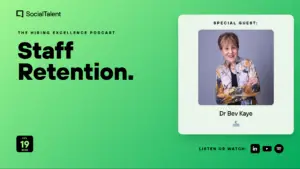
Staff Retention with Dr Bev Kaye
As teams return to offices post-pandemic, most leaders skip the hard part: actually listening to what employees learned. Bev Kaye shares a three-step framework—recognize, review, reject—to turn crisis into retention strategy.
 Johnny CampbellHost · Co-founder & CEO, SocialTalent
What you'll learn
Collect narrative feedback instead of relying only on survey stats
Ask follow-up questions on the exact word someone emphasizes
Turn a bad pandemic experience into a concrete future change
Reframe change as opportunity instead of defaulting to loss
00:00
--:--
Episode notes
Episode key takeaways
Listen for the blinking word. When someone answers your question, pick one word from their response and ask a follow-up about it. This forces depth instead of breadth and signals genuine interest. It's the difference between a checkbox conversation and one that actually reveals what matters to someone.
Bev Kaye's three-step return framework—recognize, respect and reflect; review, prioritize and re-visualize; reject, revise or capitalize—isn't about logistics. It's about debriefing the crisis so people extract meaning from it. Without that unpacking, organizations miss the learning and employees leave.
Unexpected resignations after return-to-office aren't random. People spent months discovering what they love and what they don't. The question isn't 'why are they leaving?' but 'did we ask what they loved about remote work and how to carry it forward?' Re-recruiting existing talent is as critical as recruiting new hires.
Lateral enrichment, vertical realignment, and relocation are all moves. Leverage—the framework for internal mobility—has six letters for six different career paths. Most organizations only talk about vertical. Expanding the conversation to all six options dramatically shifts retention and engagement.
Good to know
Frequently asked questions
The quick answers behind this episode.
How do I actually listen better in one-on-one conversations? +
Pick one word from their answer and ask about it. If they say ‘I felt isolated working from home,’ ask ‘Isolated—tell me more about that.’ This forces you deeper into their actual experience instead of moving to your next prepared question. It also signals you’re genuinely interested, not just collecting data.
What should I ask employees returning to the office? +
Start with: What did you love about working remotely? What was hardest? What do you wish you had at your fingertips? What have you come to appreciate? Then ask: What’s important to you coming back? What do you see your job being? Listen for the blinking word in each answer and drill down before moving on.
Why are people resigning after returning to work? +
Remote work forced people to confront what they actually love about their job and what they don’t. If you return them to the office without asking what they learned or what they want to keep, you’re ignoring a major life decision they just made. They’re not leaving the company; they’re leaving the version of work you’re asking them to return to.
How do I prevent talent loss during a return-to-office transition? +
Debrief the experience before, during, and after. Ask what they learned about themselves, not just the business. Recognize what worked. Then decide: reject outdated policies, revise ones that need updating, or capitalize on new ways of working. Most importantly, involve employees in that decision-making, not just the announcement.
What's the difference between internal mobility and just moving people up? +
Vertical is one letter in LEVERAGE: Lateral enrichment, Vertical, Enrichment, Realignment (moving down to move across), Relocation. Most organizations only talk about promotions. Expanding the conversation to all six paths dramatically increases retention because people see more futures for themselves, not just climbing a ladder.