Positioning, process, and perseverance form the backbone of any successful career move. Positioning means researching target companies and roles deeply, then highlighting the specific value you'd bring. Process involves leveraging your professional network strategically—making direct contact with hiring managers or peers rather than relying solely on applications. Perseverance acknowledges that career transitions are marathons, not sprints, and freelancing during a job search can sustain both income and momentum.
The Hiring Excellence Podcast · Episode 12
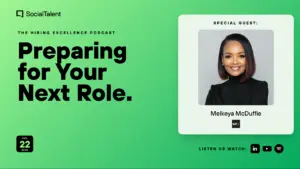
Preparing for Your Next Role with Melkeya McDuffie
Remote work has fundamentally shifted how candidates and employers connect. Melkeya McDuffie breaks down positioning, process, and perseverance—the framework job seekers need to navigate career transitions with intention and resilience.
 Johnny CampbellHost · Co-founder & CEO, SocialTalent
What you'll learn
Apply the three P's of positioning, process and perseverance to job search
Widen your candidate pool by hiring talent regardless of location
Build a candidate FAQ landing page to ease application anxiety
Ask recruiters for insight into interviewers' formality before dressing for interviews
00:00
--:--
Episode notes
Episode key takeaways
Remote hiring has eliminated geographic barriers, fundamentally widening the candidate pool and creating genuine social mobility gains. Candidates no longer need to relocate to expensive metros or commute to offices; employers can now source talent globally and access diverse skill sets regardless of location. This shift benefits both sides: employers find better fits, and candidates access opportunities previously locked behind geography and cost of living.
Quality beats quantity in applications. Rather than spray-and-pray tactics, strategic outreach to specific individuals within target organizations—whether hiring managers or peers—dramatically increases visibility. Researching the people behind the role and personalizing your approach, as demonstrated by the Amazon engineer example, transforms a generic application into a meaningful conversation.
Conscientiousness shows up in the small details: a clean virtual background, appropriate dress for the company culture, and a tidy workspace during video interviews. These aren't superficial; they signal professionalism and attention to detail. Asking recruiters for specific guidance on formality levels and the individuals you'll meet helps you calibrate your presentation authentically.
Purpose alignment drives career success far beyond salary. Once you identify what you're naturally drawn to—by reflecting on your strengths or asking trusted colleagues—and align it with your work, income and opportunity follow. The inverse is also true: chasing lucrative roles without purpose alignment creates a ceiling on both satisfaction and advancement.
Good to know
Frequently asked questions
The quick answers behind this episode.
How do I identify my career purpose? +
Pay attention to what you naturally execute flawlessly, regardless of circumstances. If self-reflection doesn’t surface it, ask former leaders and colleagues what they see you do exceptionally well. A common theme across that feedback points to your purpose. Once you align purpose with skills and work, there’s no limit to how far you can go.
Should I apply to many jobs or focus on fewer, targeted applications? +
Quality over quantity. Research target companies deeply, then make direct contact with hiring managers or peers already in those roles. A tailored email referencing specific roles and genuine interest in their work generates far more traction than generic applications. Combine strategic outreach with your formal application for maximum impact.
How should I prepare for a virtual interview? +
Ask your recruiter for guidance on company formality and the specific individuals you’ll meet. This helps you calibrate your dress and tone authentically. Ensure your virtual background is clean and professional. Research the interviewers’ profiles on LinkedIn to understand their level of formality, then dress slightly above that baseline to signal respect and conscientiousness.
What can employers do to improve candidate experience during high-volume hiring? +
Shorten application processes, use empathetic language in all candidate communications, and create a landing page with FAQs addressing common questions about timeline and next steps. Maintain a CRM to keep candidates warm with organizational updates even when you’re not hiring. These tactics personalize experience at scale without overwhelming recruiters.
How do I stay motivated during a long job search? +
Recognize that finding the right match between your skills and an organization takes time and work. Maintain mental discipline by knowing you have value to offer. Consider freelancing to generate income and reduce anxiety while pursuing your bigger career plan. Perseverance is the third P—treat the search as a marathon, not a sprint.