Real recruiting strategy happens outside the kickoff meeting. The hiring managers who attract top talent are thinking about recruiting constantly—not just when a role opens. This means recruiters must earn credibility by delivering results first, then insert themselves into strategic conversations before urgency strikes.
The Hiring Excellence Podcast · Episode 34
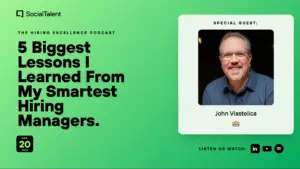
5 Biggest Lessons I Learned From My Smartest Hiring Managers | with John Vlastelica
Strategy, speed, and ownership separate great hiring managers from the rest. John Vlastelica shares five concrete lessons from working with thousands of hiring leaders—and why recruiters must evolve into talent advisors to compete.
 Johnny CampbellHost · Co-founder & CEO, SocialTalent
What you'll learn
Start strategy conversations with hiring managers before any req actually opens
Push hiring managers toward quality over quantity with a short qualified slate
Speed up decisions with same-day debrief meetings instead of delayed panels
Treat every candidate like a future hire since managers are being judged too
00:00
--:--
Episode notes
Episode key takeaways
Quality over quantity isn't just a slogan; it's a hiring manager maturity marker. The best leaders refuse to review dozens of resumes and instead demand 3–5 carefully curated candidates. They also invest time defining what 'quality' actually means—moving beyond coded language like 'smart' or 'high potential' to specific, measurable signals.
Speed is the love language of hiring managers. Every communication from HR that slows the process down erodes trust. Recruiters who frame their work around cutting 20 days from time-to-fill—not 2—and who pre-book interview slots and enable same-day decisions become indispensable partners.
Great candidates interview the hiring manager as much as the reverse. Candidates choose based on the manager's engagement, listening, and investment—not just compensation or job title. This reframes the recruiter's role: help hiring managers step up, because mediocre managers lose offers to competitors with better leaders.
Unreasonable hiring managers drive innovation. Those who demand the impossible—open an office in a new city, cut 20 days from a 50-day process, improve diversity—force recruiters to think differently and leapfrog peers. The best career moves come from running toward the fire, not away from demanding leaders.
Good to know
Frequently asked questions
The quick answers behind this episode.
How do I get hiring managers to engage in strategy conversations outside of open reqs? +
Start with managers in pain—those struggling with speed, quality, or diversity. Prove yourself by filling roles effectively, then use social proof: ‘Other managers like you are doing X and seeing Y results.’ Don’t criticize; reframe as ‘if you want this outcome, you can’t operate the old way.’ Avoid pushing strategy onto busy leaders; let them pull you in.
What's the fastest way to improve time-to-hire? +
Break time-to-fill into stages: opening to first screen, screen to interview, interview to decision. Most waste happens in scheduling and delayed decisions. Pre-book interview days with hiring managers and make same-day decisions instead of waiting to interview all candidates before comparing. Competitors are already doing this.
How do I shift from transactional recruiter to talent advisor? +
Reframe your value: don’t ask managers to be better so you can partner with them. Instead, show them that great candidates demand great hiring managers—and if they want top talent, they must step up. Bring market intelligence, recommend interview methodologies, and hold them accountable through feedback and performance metrics.
What should I look for in a hiring manager maturity model? +
Movement from passive (‘I wonder if that candidate accepted’) to active ownership (‘I’m courting candidates early and staying close’). Mature managers pull recruiters into quarterly business reviews, ask tough questions, and expect strategic input on location decisions and diversity. They see recruiting as part of their job, not something delegated entirely to HR.
How do I handle hiring managers who want to see every applicant? +
Pause and diagnose the root cause: unclear requirements, no urgency, or poor expectations-setting. Run a calibration meeting—review real resumes and LinkedIn profiles side-by-side to align on what good looks like. This ‘time to alignment’ metric prevents endless resume requests and builds trust faster than sending batches.