Only 15% of organizations successfully change their culture, yet 93% report the pandemic has altered theirs—and 75% say it's been positive. The gap between passive drift and proactive design is where culture either thrives or erodes.
The Hiring Excellence Podcast · Episode 39
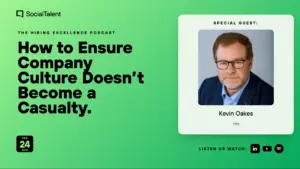
How to Ensure Company Culture Doesn’t Become a Casualty | with Kevin Oakes
Most organizations fail at culture change. Kevin Oakes reveals the 18-step blueprint that separates the 15% who succeed—and why remote work makes intentional culture design more critical than ever.
 Johnny CampbellHost · Co-founder & CEO, SocialTalent
What you'll learn
Diagnose real employee sentiment before attempting any culture change
Identify grassroots influencers and energizers, not just formal leaders
Redesign onboarding to build real connections, not just paperwork
Stay transparent about uncertain timelines instead of fixed return dates
00:00
--:--
Episode notes
Episode key takeaways
Culture renovation, not transformation, is the winning frame. Rather than tearing down and rebuilding, high-performing companies preserve core values and purpose while adapting behaviors and systems for agility. The metaphor holds: you don't knock down load-bearing walls.
The plan phase is where most companies fail. Before building anything, map employee sentiment through frequent pulse surveys (not annual snapshots), identify hidden influencers via organizational network analysis, and involve grassroots culture ambassadors—not just the C-suite.
Remote work hasn't killed serendipity or innovation; it's exposed which leaders create psychological safety for it. Kevin points to one CHRO who found employees more creative during lockdown because they felt safe proposing unconventional solutions.
Transparency about uncertainty outperforms false certainty. Saying 'we don't know when we'll return to the office, but we'll keep you updated' builds trust faster than announcing dates you can't keep. Employees see through performative confidence.
Good to know
Frequently asked questions
The quick answers behind this episode.
Why do most culture change initiatives fail? +
Organizations skip the planning phase and leap into building. They fail to understand employee sentiment first, miss the actual influencers (often invisible to leadership), and don’t involve grassroots ambassadors. Without that foundation, change initiatives lack buy-in and momentum.
How do you identify culture influencers in a remote environment? +
Organizational network analysis—surveying employees about who they turn to for advice and energy—is more reliable than observation. Remote communication channels (Slack, Teams, email) actually make it easier to track information flow than cafeteria conversations, though surveying remains the preferred ethical approach.
Should companies set return-to-office dates? +
No. Avoid specific dates; instead, communicate the earliest realistic window (‘not before June’) while acknowledging uncertainty beyond that. Transparency about what you don’t know builds more trust than commitments you’ll break. Employees respect leaders who admit constraints.
What's the business case for culture renovation? +
Positive culture directly correlates with performance. Microsoft’s shift to a growth-mindset culture under Satya Nadella reversed decline and created the world’s most valuable company. Conversely, toxic cultures (WeWork, Wells Fargo, Boeing) can crater valuations overnight. Culture is a board-level governance issue, not HR overhead.
How do you maintain culture during rapid remote hiring? +
Intentional connection-building replaces organic osmosis. High-performing companies deliberately introduce new hires to subject-matter experts and cross-functional peers, not just their direct manager. People who feel isolated in year one typically leave; deliberate relationship architecture keeps them engaged long-term.