Networks have contracted measurably during the pandemic. Research from Harvard Business Review found professional and personal networks shrank by 16%, with men experiencing a 30% decline while women's networks remained stable—largely because men traditionally bonded through activity-based interactions like golf or pub visits, which lockdowns eliminated.
The Hiring Excellence Podcast · Episode 50
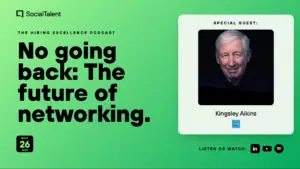
No going back: The future of networking | with Kingsley Aikins
COVID has shrunk professional networks by 16%, especially for men. But Kingsley Aikins argues the shift to digital work creates new opportunities—if you're intentional about building relationships across geography and weak ties.
 Johnny CampbellHost · Co-founder & CEO, SocialTalent
What you'll learn
Audit your existing network to reveal hidden gaps and dormant ties
Segment your contacts into four tiers from contact to trusted friend
Reconnect with one dormant contact each week to reawaken valuable ties
Open conversations with prepared questions instead of leading with self-introduction
00:00
--:--
Episode notes
Episode key takeaways
Geography is no longer destiny. The shift to digital work means what you do matters far more than where you are. This opens access to talent globally and lets employees build hyphenated lives—living in one country while maintaining deep professional ties to another—fundamentally changing how organizations source and retain talent.
Kingsley emphasizes that weak ties—not your closest relationships—drive career breakthroughs. Your next job, your best business opportunity, often comes from someone you haven't spoken to in years or a dormant connection you intentionally reactivated. The outer rings of your network are where serendipity lives.
Audit your network like you'd audit a spreadsheet. Print it out, segment it into contacts, connections, relationships, and friends, then identify redundant entries, major gaps, and dormant connections worth reviving. One person per week is a sustainable rhythm for rebuilding depth.
Sponsorship beats mentorship in career advancement. A mentor talks to you; a sponsor talks about you in rooms you're not in. Organizations now hire for network portability—they want employees who bring relationships and can advocate for talent, making your network a competitive asset you own and carry between roles.
Good to know
Frequently asked questions
The quick answers behind this episode.
How has COVID changed professional networking? +
Networks have shrunk 16% overall, with men’s networks declining 30% while women’s remained stable. However, digital work has eliminated geographic barriers, enabling global connection and reducing travel costs. The trade-off: weak ties—crucial for opportunity—have atrophied because people spend more time with close relationships and less with strangers and acquaintances.
Why are weak ties more valuable than close relationships? +
Strong connections are redundant—they know what you know and who you know. Weak ties bridge you into different networks, industries, and geographies. Research shows your next job typically comes from a weak connection, not your best friend. They expose you to novel information and opportunities your inner circle cannot.
What's the difference between a mentor and a sponsor? +
A mentor talks to you, offering advice and perspective. A sponsor talks about you in decision-making rooms you’re not in, using their credibility to advocate for your advancement. Both matter, but sponsorship—someone willing to put their reputation on the line for you—is what drives promotion and opportunity.
How do I rebuild dormant connections without seeming transactional? +
Lead with genuine interest, not ask. Segment your dormant contacts geographically or by era (school, past employers, etc.), then reconnect with one person per week. Ask what you can do for them, seek their wisdom, and offer introductions. Remember small personal details about them—their interests, family, hobbies—and reference them years later.
How should managers onboard new hires in a remote world? +
Shift from information-sharing to relationship-building. The manager’s job is to introduce the new hire to key people and advocate for them internally, not to teach everything themselves. This accelerates integration, builds network depth, and correlates with higher retention and promotion rates.