The gap between the old world and new world isn't just a timeline—it's a psychological fog zone populated by anxiety, disorientation, and ambiguity. Organizations that fail to prepare for change in advance, staying focused on urgent tasks rather than important relationship-building, find themselves scrambling to build trust when crisis hits.
The Hiring Excellence Podcast · Episode 57
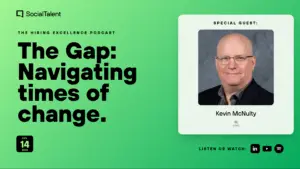
The Gap: Navigating times of change | with Kevin McNulty
Navigating organizational change requires more than crisis management—it demands trust, transparency, and a growth mindset. Kevin McNulty shares how leaders can guide teams through uncertainty and emerge stronger.
 Johnny CampbellHost · Co-founder & CEO, SocialTalent
What you'll learn
Face disruptive change head-on rather than retreating from it like cattle do
Repeat clear communication about where the change is headed and why
Check your own ego since it blocks humility, transparency, and vulnerability
Establish trust and relationships before a crisis forces you to rebuild it fast
00:00
--:--
Episode notes
Episode key takeaways
Preparedness isn't a trait that emerges during change; it's a pillar that enables adaptability, collaboration, trustworthiness, and accountability. Kevin McNulty emphasizes that leaders must establish culture and relationships before disruption arrives, not after.
Uncertainty avoidance—the tendency to see change as dangerous rather than opportunity—is learnable and changeable. It stems from environment and culture, not fixed personality. Leaders who model calmness, transparency about what they don't know, and a clear decision-making framework help people reframe fear as forward motion.
Communication during transition must convey both urgency and partnership. Rather than top-down directives, effective leaders say 'I need you' and invite employees into problem-solving, turning passive followers into active collaborators who rally together.
Ego is the biggest impediment to navigating change successfully. Unchecked ego prevents humility, transparency, and vulnerability—the exact qualities required to ask for help, admit uncertainty, and build the psychological safety teams need to move through the fog together.
Good to know
Frequently asked questions
The quick answers behind this episode.
How do leaders help anxious employees move through organizational change? +
Establish trust and relationships before change arrives, not during crisis. During transition, communicate transparently about what you don’t know, share a clear framework for decisions, and invite employee input. Hope—seeing the new world clearly enough to believe in it—is a powerful antidote to fear. The closer people move through the gap, the clearer the destination becomes.
What's the difference between running from change and running into it? +
Like buffalo facing a storm rather than cattle fleeing it, proactive teams move through disruption faster. Hunker-down approaches extend the pain. When leaders take a stance of ‘we’re going to face this together,’ people rally, collaborate, and pull each other forward instead of waiting passively for the storm to pass.
Why do organizations fail to build trust before crisis hits? +
Leaders operate under the tyranny of the urgent—focused on mission, shareholders, and immediate tasks. Important work like relationship-building and culture-setting gets pushed to the background. When sudden change arrives, organizations realize too late that trust can’t be repaired in weeks after twenty years of neglect.
How does a growth mindset help teams navigate the gap? +
A growth mindset reframes blockers as obstacles to remove, not character flaws. Instead of labeling someone a ‘blocker,’ leaders ask what’s preventing them from moving forward—fear, lack of training, unclear vision—and remove those barriers. Everyone wants to grow; nobody wants to stay stuck in the fog.
What role does ego play in resistance to change? +
Unchecked ego prevents humility, transparency, and vulnerability—qualities essential for asking for help and admitting uncertainty. Leaders with inflated egos can’t model the psychological safety teams need. Exploring your own ego and how it shapes your behavior is foundational to guiding others through transition.