A 47-point gap between employer perception (67%) and employee reality (20%) exposes the difference between diversity and inclusion. Having diverse staff and creating a culture where they belong are not the same thing. Continuous internal engagement—asking employees directly about their experience—is the only way to close that gap.
The Hiring Excellence Podcast · Episode 67
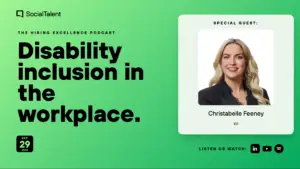
Disability inclusion in the workplace | with Christabelle Feeney
Only 20% of employees with disabilities feel their workplace supports them to thrive—yet 67% of employers believe they do. Christabelle Feeney reveals why disclosure remains hidden and how to build genuinely inclusive hiring processes.
 Johnny CampbellHost · Co-founder & CEO, SocialTalent
What you'll learn
Recognize the gap between leadership perception and employee experience of disability support
Use a reasonable accommodation passport that follows employees across managers and roles
Ask every candidate about support needs consistently, not just those who disclose
Audit your careers website's accessibility as the first practical inclusion step
00:00
--:--
Episode notes
Episode key takeaways
Christabelle emphasizes that disability itself is diverse. An organisation can be wheelchair-accessible and still exclude people with invisible disabilities, cognitive conditions, or sensory needs. Communication norms, meeting times, and platform choice (Zoom vs. Google Meet for captions) all disable or enable participation. Inclusion requires understanding the full spectrum.
Two-thirds of reasonable accommodations requested in research had zero cost. Most relate to time and flexibility—not ramps or expensive assistive tech. A person with sight loss might work 6am–3pm during winter months when daylight is limited. Flexibility attracts driven talent and costs nothing; fear of accommodation requests often stems from ignorance, not genuine burden.
Role models drive disclosure. Once a senior leader discloses their disability, others feel safe to do the same. Employees who disclose are 30% more engaged and more innovative. Yet ERGs—the primary vehicle for visibility—are unpaid volunteer work. Organisations must either pay ERG leads or carve time from their day job, or risk burnout and tokenism.
Normalise accommodation requests from day one. Signal on job specs that reasonable accommodations are welcome and explain the process. When candidates request support only during final rounds and then go silent, they reasonably suspect discrimination. Progressive employers ask every candidate upfront, making it standard practice rather than a red flag.
Good to know
Frequently asked questions
The quick answers behind this episode.
What should I do if I suspect an employee has a disability but they haven't disclosed it? +
Never assume or make it about the disability itself. Instead, consistently offer support at key moments: interview stage, induction, and ongoing. Ask what supports would help them succeed. Let them lead. An individual might have a condition you see as disabling but not identify as disabled themselves. Focus on the person’s needs, not your perception.
How do I make reasonable accommodation requests less scary for hiring managers? +
Use a structured process like a reasonable accommodation passport—a live document that records needs, reviews them every few months, and travels with the person if they change roles or managers. This removes guesswork and gives managers a framework. It also normalises the conversation so it feels like standard HR practice, not a special exception.
What's the first step to make my organisation more disability-inclusive? +
Check your website’s accessibility using a free web accessibility checker (Google ‘free web accessibility checker’). That’s your front door. Then add a diversity and inclusion statement to all job specs and career pages, explicitly welcoming people from diverse backgrounds and confirming you’ll provide reasonable accommodations. Both are quick, cost nothing, and attract a far wider talent pool.
How has remote work changed disability inclusion in hiring? +
Remote work has opened doors—people with disabilities have requested flexible arrangements for years. But employers must avoid assuming remote is automatically better for disabled staff. Provide choice, not default exclusion. Ensure remote workers are actively included in team dynamics and that technology (captions, live transcription, accessible platforms) supports participation, not just presence.
Why do candidates go silent after requesting accommodations during interviews? +
When accommodation requests only surface late in the process and then communication stops, candidates reasonably suspect discrimination. Progressive organisations signal upfront that accommodations are normal and expected. They ask every candidate, not just those they suspect need support. This removes the stigma and the suspicion that disclosure will cost them the role.