The traditional succession model is broken: companies build lists from people they already know (usually within one function), assign readiness levels with no supporting development plan, and never tell candidates they're on the list. This creates bias, kills diversity pipelines, and forces external hiring when internal talent could have succeeded with transparency and real support.
The Hiring Excellence Podcast · Episode 69
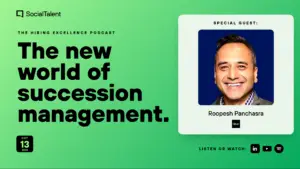
The new world of succession management | with Roopesh Panchasra
Most companies treat succession planning as a checkbox exercise—looking externally first, keeping internal candidates in the dark, and ignoring the institutional knowledge walking out the door. Roopesh Panchasra shares why that costs billions and how to fix it.
 Johnny CampbellHost · Co-founder & CEO, SocialTalent
What you'll learn
Expand succession lists beyond the leaders' existing personal network
Tell candidates when they're on a succession list and why
Assess leadership behaviors and transferable skills over identical past job titles
Run internal and external searches concurrently rather than internal as fallback
00:00
--:--
Episode notes
Episode key takeaways
Roopesh challenges the assumption that you must have done a job to get it. Past experience qualifies you to audition; success depends on behaviors, instinct, and the ability to navigate a completely different organizational context. A surgeon needs prior surgery experience; a CEO does not need prior CEO experience.
Leadership currency—the institutional knowledge, relationships, and proven ability to navigate your organization—is worth protecting. Leaders who've earned it are being targeted by far more competitors than ever before, yet most companies don't invest in keeping them engaged through transparent succession conversations and cross-functional mobility.
Succession planning must happen concurrently, not sequentially. Internal and external searches should run in parallel, evaluated on merit alone, not on a hierarchy that assumes external candidates bring more brand value or fresh thinking than internal leaders.
Executive TA teams should act as talent brokers for internal candidates the same way they do for external ones: proactively identifying fit, building development plans, and creating opportunities before a role opens. Planning for succession is a core responsibility, not an add-on task.
Good to know
Frequently asked questions
The quick answers behind this episode.
Why do companies hire external executives instead of promoting from within? +
Organizations often assume external hires send a stronger market signal and bring fresh perspective. But this approach ignores institutional knowledge loss (valued in the billions), creates bias by limiting internal pools to people leaders already know, and misses the opportunity to develop and retain high-potential internal talent through transparent succession planning.
What is leadership currency and why does it matter for succession? +
Leadership currency is the proven ability to navigate your organization, relationships built across functions, and demonstrated success in a competitive environment. It’s earned through years of performance and represents real value. Companies that don’t recognize and invest in this currency risk losing leaders to competitors who will.
How should companies assess whether an internal candidate can succeed in a new role? +
Move beyond ‘have you done this job before.’ Instead, evaluate transferable skills, behaviors, and personality traits—how they lead, develop others, and drive followership. Pair assessment with transparent feedback, mentoring, coaching, and clear development plans that bridge identified gaps before promotion.
What happens when you tell internal candidates they're on a succession list? +
Transparency reduces attrition and builds trust, even when someone doesn’t get the role. Honest feedback, fair process, and visible development opportunities mean disappointment doesn’t translate to disengagement. The risk of attrition is far higher when candidates are kept in the dark and then passed over for external hires.
How can TA leaders improve succession planning at their organization? +
Treat internal succession as a core TA responsibility, not an add-on. Build talent brokers for internal executives. Plan proactively before roles open. Search internally and externally in parallel. Expand candidate pools beyond direct reports. Assess for behaviors and fit, not just past titles. Invest in development and transparency.