Ninety-seven percent of disabilities are invisible. Cancer, dyslexia, autism, diabetes, and chronic fatigue all qualify as disabilities under UK equality law, meaning most organisations already employ disabled people who simply don't identify as such. This reframes disability from a minority issue to a majority one.
The Hiring Excellence Podcast · Episode 92
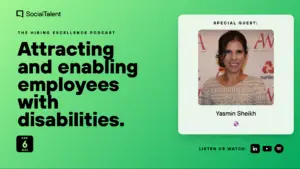
Attracting and enabling employees with disabilities | with Yasmin Sheikh
Disability affects one in five workers during their career—yet remains the forgotten pillar of DEI. Yasmin Sheikh reveals why disabled talent stays hidden, how to redesign recruitment, and why normalizing adjustments matters more than asking people to disclose.
 Johnny CampbellHost · Co-founder & CEO, SocialTalent
What you'll learn
Recognize that the vast majority of disabilities are not visible
Normalize asking every candidate about adjustment needs at interview stage
Provide a direct personal contact for disability adjustment requests
Share disability stories openly to normalize the conversation at work
00:00
--:--
Episode notes
Episode key takeaways
The onus to disclose has it backwards. Rather than asking disabled candidates to reveal themselves, organisations should signal psychological safety upfront: mention adjustments on the website, ask all candidates about access needs at recruitment stage, and normalise the conversation like dietary requirements at events. This removes stigma and fear of discrimination.
Home working proved transformative during the pandemic. Seventy percent of disabled respondents in the legally disabled research found remote work hugely beneficial—it eliminated exhausting commutes, enabled self-paced work, and removed the pressure to fit ableist office norms. Yet not all disabled people prefer it; the key is choice and flexibility.
Soft bigotry of low expectations kills careers quietly. Well-intentioned managers often avoid stretching disabled employees, skip career conversations, withhold high-profile cases, and fail to introduce them to clients—all without saying a word. This internalises shame and wastes talent that could have flourished with proper sponsorship.
Representation and visibility drive culture change. When senior leaders speak openly about their own disabilities or challenges, it signals permission for others to do the same. The legally disabled research found visibility of other disabled people ranked in the top four factors contributing to positive workplace experiences.
Good to know
Frequently asked questions
The quick answers behind this episode.
Why don't disabled employees tell their employer about their disability? +
Fear of discrimination, past prejudice, and shame often prevent disclosure. The legally disabled research found that when organisations fail to mention adjustments on their website or normalise these conversations, disabled people assume they won’t be welcomed. The onus shouldn’t be on the disabled person to ask—it should be on the employer to signal safety first.
What are simple recruitment adjustments for disabled candidates? +
Ask all candidates upfront: ‘What adjustments do you need to do your best in this interview or role?’ Provide a direct email or phone contact for accessibility questions rather than generic inboxes. Ensure your website and applicant tracking system are screen-reader accessible. Test your own systems before candidates do. These normalise adjustments without singling anyone out.
How has remote work changed disability inclusion? +
Seventy percent of disabled workers found home working hugely beneficial—it eliminated inaccessible commutes, reduced sensory overload, and allowed self-paced work. However, not all disabled people prefer it; some face isolation or rely on lip reading. The key is offering genuine flexibility and choice rather than assuming one model works for everyone.
What technology accessibility adjustments matter most? +
Live captioning for hearing-impaired employees, screen readers for visually impaired staff, and noise-cancelling headphones for neurodivergent workers are foundational. Ask all meeting participants upfront what adjustments they need. Technology is simply a tool enabling people to work differently—like glasses for vision correction—not special treatment.
How can senior leaders drive disability inclusion culture? +
Speak openly about your own challenges or disabilities. When leaders normalise vulnerability, it signals permission for others to do the same and removes shame. Research shows visibility of disabled people in leadership ranks in the top four factors for positive workplace experiences. The platform senior leaders have is powerful; using it openly can transform organisational culture.