Performative DEI—rainbow logos, one-off statements, symbolic hires—often emerges not from malice but from urgency and inexperience. Companies scrambling to respond to social pressure after 2020 reached for the easiest, most visible gestures. The real question isn't whether to make a statement; it's whether that statement becomes a catalyst for deeper institutional work or a substitute for it.
The Hiring Excellence Podcast · Episode 96
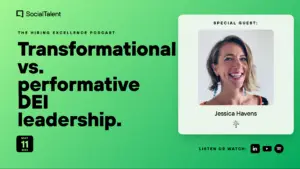
Transformational vs. performative DEI leadership | with Jessica Havens
Rainbow flags and diversity statements mean nothing without structural change. Jessica Havens breaks down why most DEI initiatives fail and what actually moves the needle on inclusion.
 Johnny CampbellHost · Co-founder & CEO, SocialTalent
What you'll learn
Treat a performative gesture as a possible starting point, not the finish line
Build DEI expectations into hiring qualifications for every candidate, not only minorities
Avoid loading emotional labor onto one minority employee without real institutional support
Invest in your own leadership circle before training the wider organization
00:00
--:--
Episode notes
Episode key takeaways
Tokenism thrives when organizations assign DEI responsibility to the people who look like the problem they're trying to solve. A single person of color or woman, working without budget or institutional support, carrying emotional labour on top of a full-time job—this is the norm, not the exception. Transformational work requires distributing accountability across leadership and embedding equity into every hiring decision, not just DEI roles.
Representation at the top matters, but only if the culture shifts to match. Hiring a diverse board or leadership team without changing how decisions are made, how work gets done, or what gets valued simply places new people into old systems. The magic happens when leaders in power undergo genuine self-reflection and recognize that DEI is inseparable from their own professional development.
Internal mobility and professional development funds are equity issues, not HR perks. When international experience is required for promotion but women face different barriers to taking it, equity means removing those barriers for individuals—not treating everyone identically. The same applies to master's degrees, mentorship, and leadership pipelines: understand the obstacle, then dismantle it.
Start with the board, not the employees. Most organizations invest in training the masses while leaving decision-makers unexamined. Investing in a DEI consultant or coach for leadership and strategic planning delivers far more value than a 45-minute training for 500 staff. Transformational change flows top-down; it cannot be built from the bottom up.
Good to know
Frequently asked questions
The quick answers behind this episode.
Is performative DEI worse than doing nothing? +
Not necessarily. A symbolic gesture—like a rainbow flag—can open the door to accountability if employees use it to demand deeper action. The risk is that companies mistake the gesture for the work itself. Performative acts become harmful when they substitute for structural change, not when they catalyse it.
Why do DEI directors burn out so quickly? +
They’re often hired into roles with significant responsibility but minimal budget, authority, or institutional support. Emotional labour compounds when the person is also expected to represent their identity group. High turnover in DEI roles signals that organizations have created positions without creating the conditions for success.
How do you build diverse leadership when the talent pool is small? +
Stop waiting for external talent. Create internal mobility programs: professional development funds, mentorship, and clear pathways to leadership. Remove structural barriers—like requiring international experience without supporting how people with caregiving responsibilities can access it. Grow your own talent rather than assuming diversity only exists outside.
What should leaders do first on DEI? +
Invest in yourself and your leadership circle before rolling out company-wide initiatives. Work with a DEI coach or consultant on self-awareness and strategic planning. This is more valuable than generic employee training. Transformational change requires leaders to examine their own assumptions, privilege, and role in perpetuating systems.
How do you know if DEI work is transformational or performative? +
Ask whether the culture is shifting to match the representation. If you hire diverse leaders but they operate within unchanged systems and decision-making processes, it’s performative. Transformational DEI changes how work gets done, who has power, and what gets valued—not just who sits at the table.