DEI, culture, and employee experience are inseparable. Organizations that treat them as separate functions—or worse, as a cost centre to be cut when budgets tighten—miss the ripple effect: people join companies for inclusive culture and leave when they don't find it. The three must be designed together from the start.
The Hiring Excellence Podcast · Episode 142
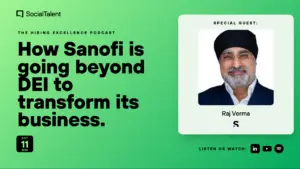
How Sanofi is going beyond DEI to transform its business | with Raj Verma
Sanofi's approach to diversity, equity, and inclusion goes beyond compliance—it's woven into hiring, policy, culture, and patient outcomes. Raj Verma shares how a 95,000-person organization made DEI a business transformation, not a tick-box function.
 Johnny CampbellHost · Co-founder & CEO, SocialTalent
What you'll learn
Expand DEI focus beyond gender to intersectionality, disability, and LGBTQIA+ identities
Launch a global parental leave policy applying equally to every employee
Uncover why men skip full parental leave despite being eligible
Adapt DEI measurement plans to match each country's legal limits
00:00
--:--
Episode notes
Episode key takeaways
Raj built Sanofi's diversity strategy by co-creating it with 35 leaders across the globe, not importing a consultant's template. The result was buy-in at launch and internal engagement that lit up Yammer because employees saw themselves reflected in every pillar—gender, race, disability, LGBTQIA+ inclusion, and generational diversity.
Global consistency with local execution is the operating model. Sanofi set five diversity strands as the transversal strategy, then required the top ten markets (70% of headcount) to build country-specific plans within legal and cultural constraints. The CEO and Chief People Officer review progress twice yearly with country leaders, holding them accountable.
Policies that matter are co-created and measured. A global 40-week parental leave policy revealed that men weren't taking it—not because they couldn't, but because they feared missing promotions. Storytelling and visibility dashboards shifted behaviour. The same rigor applies to pay equity, flexible work, accessibility, and onboarding.
The future of DEI sits at the intersection of technology, social change, and belonging. AI bias in hiring algorithms, hybrid team dynamics with bots and remote workers, third careers as retirement shifts, and polarization around DEI itself all demand continuous iteration—not a finish line.
Good to know
Frequently asked questions
The quick answers behind this episode.
How do you implement DEI across 80+ countries with different legal requirements? +
Set a clear global strategy with five diversity strands, then require top markets to create country-specific plans. In the US, you can measure demographics; in France, you cannot measure race or faith. Each country dials up or down what’s legally and culturally relevant, but all report progress twice yearly to leadership for accountability.
What's the difference between bolting on DEI and building it in? +
Bolting on means a separate function, often cut when budgets tighten. Building it in means designing policy, process, and practice around equity from the start—and integrating DEI into every leader’s role. At Sanofi, every executive sponsor has a visible leadership role in inclusion work; it’s not delegated to a DEI team.
How do you measure whether a DEI policy actually works? +
Treat it like a business project with KPIs. The 40-week parental leave policy revealed men weren’t using it despite eligibility. Quarterly dashboards made this visible, triggering deeper investigation into fears of missed promotions. Measurement drives behaviour change and reveals the real barriers hiding behind policy.
Why should DEI matter to shareholders and the C-suite? +
Because diverse, inclusive teams deliver better patient outcomes, which drives profitability. Sanofi’s CEO and executive team see DEI as a business enabler for transformation, not a compliance box. When the majority understands allyship and inclusion as a competitive advantage, the work becomes sustainable and resourced.
What's the biggest DEI challenge ahead for large organizations? +
Staying ahead of rapid change: AI bias in algorithms, hybrid team dynamics with remote and bot workers, shifting retirement ages, and growing polarization around DEI itself. The work is never finished—it requires continuous learning, connection to external social trends, and willingness to iterate without taking your foot off the pedal.