The employment gap is staggering: while national unemployment sits around 4%, blind and low vision individuals face a 70% unemployment rate that hasn't budged in decades. This isn't a skills problem—it's an awareness and accessibility problem on the employer side.
The Hiring Excellence Podcast · Episode 167
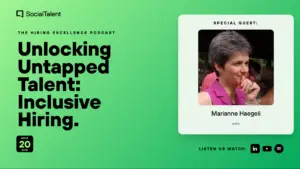
Unlocking Untapped Talent: Inclusive Hiring with Marianne Haegeli
Seventy percent unemployment among blind professionals masks a massive talent gap. Marianne Haegeli shares how accessible hiring practices unlock skilled sourcing specialists—and why building for low vision makes your entire workplace more productive.
 Johnny CampbellHost · Co-founder & CEO, SocialTalent
What you'll learn
Recognize that accessible design also benefits neurodivergent employees at scale
Identify how assistive technology opens most computer-based roles to blind candidates
Build a blended sourcing curriculum combined with real corporate work experience
Value the creative problem-solving and active listening skills blind candidates bring
00:00
--:--
Episode notes
Episode key takeaways
Any office role requiring a computer is viable for blind or low vision professionals when assistive technology is in place. Screen readers, magnification software, and keyboard navigation eliminate the technical barrier; the real barrier is recruiting platforms that aren't accessible and hiring managers who don't know to ask.
Marianne's sourcing program demonstrates measurable ROI: in fiscal 2023, ENSIGHT facilitated placement of 93 blind or visually impaired individuals into regular employment, with the sourcing track producing some of the highest employment rates across all programs. Bristol Myers Squibb extended job offers to graduates, and participants landed roles at Johns Hopkins and beyond.
Blind and low vision professionals bring two underrated soft skills: creative problem-solving born from daily workarounds, and active listening that translates to superior candidate engagement and interview quality. These aren't compensatory—they're competitive advantages.
Accessibility designed for blind users benefits 40% of your workforce. Building for low vision automatically improves usability for neurodivergent learners, making documents, platforms, and handbooks clearer for everyone. It's not a niche accommodation—it's universal design that pays dividends across your entire organization.
Good to know
Frequently asked questions
The quick answers behind this episode.
Can someone who is blind or low vision work in recruiting or sourcing roles? +
Yes. Any computer-based office role is viable with assistive technology like screen readers and magnification software. Blind professionals navigate screens via keyboard and audio feedback, performing the same functions as sighted colleagues. The sourcing program at ENSIGHT proves this: graduates work as sourcing specialists, handling candidate research, job posting analysis, and talent acquisition tasks remotely.
What's the employment rate for ENSIGHT sourcing program graduates? +
The sourcing track has one of the highest employment rates among ENSIGHT programs. In fiscal 2023, the organization facilitated placement of 93 blind or visually impaired individuals overall. Sourcing cohorts have seen direct job offers from Bristol Myers Squibb and placements at organizations like Johns Hopkins, with graduates also landing roles leveraging transferable skills.
How long does the ENSIGHT sourcing training program take? +
The program runs 20 weeks total: 12 weeks of blended learning combining Social Talent’s online sourcing curriculum with weekly virtual instructor-led sessions, plus 8 weeks of paid work experience on a corporate talent acquisition team. Participants also receive resume and LinkedIn profile coaching to build personal brand before the work experience phase.
What accessibility features should recruiting platforms have? +
Recruiting platforms must be screen-reader compatible, support keyboard navigation, and use sufficient color contrast. Employers should provide alternative submission methods (email, phone) if platforms aren’t accessible. Providing job materials a day in advance allows candidates using screen readers to review content, take notes, and prepare. Microsoft’s built-in accessibility checker and WCAG standards guide platform design.
How do I find blind or low vision talent for my organization? +
Visit nsite.org and subscribe to ENSIGHT Connect, a curated job board with 500+ blind and low vision job seekers. Post positions vetted for accessibility and remote-work suitability. ENSIGHT also has a dedicated colleague who matches employers with talent. Alternatively, reach out directly via the website or LinkedIn to discuss partnership opportunities and talent sourcing.