One size fits all HR fails at scale. Each country operates under different labor laws, cultural norms, and community contexts that headquarters cannot predict or control. The shift from franchise-style enforcement to trust-based adaptation—where local teams translate global principles into their reality—requires letting go of the assumption that the centre knows best.
The Hiring Excellence Podcast · Episode 201
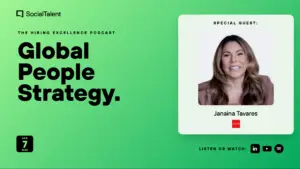
Global People Strategy with Janaina Tavares (ActionAid)
How do you build HR policies for 60 countries with vastly different labor laws and cultures? Janaina Tavares, global head of people at ActionAid, explains why listening to local teams—not imposing headquarters rules—is the only approach that works.
 Johnny CampbellHost · Co-founder & CEO, SocialTalent
What you'll learn
Design global policies by listening to local teams before dictating standards
Assess candidates for mission alignment rather than religion or background
Stretch limited training budgets by leveraging peer learning and partnerships
Read silence in meetings as a warning sign of psychological unsafety
00:00
--:--
Episode notes
Episode key takeaways
Janaina Tavares describes the process: start by listening to HR teams and leaders across all regions to understand their legal environments, cultural expectations, and lived experiences. Build a global core that reflects organizational principles, then create structured space for local adaptation. Feedback loops matter—when staff see their input reflected in final policies, adoption and credibility follow.
Hiring for global roles demands understanding local context without relying on protected characteristics. Rather than asking about religion, tribe, or gender, assess whether candidates understand the specific market they'll serve and align with organizational mission and feminist leadership principles. Someone without direct experience can still 'get it' if they demonstrate genuine global perspective.
Psychological safety in high-stress sectors requires combining global consistency with local delivery. A global well-being dashboard identifies hotspots; EAP providers are matched to local geography so staff access support from professionals who understand their country's context. Line manager accountability and visible leadership commitment to well-being prevent toxic cultures from forming undetected.
Budget constraints force creative prioritization. When training budgets are severely limited, focus on mission-critical capability building—leadership, safeguarding, people management—and leverage pro bono partnerships, peer learning, and cross-regional communities of practice. Maximizing value, not budget, means anchoring every investment in organizational impact.
Good to know
Frequently asked questions
The quick answers behind this episode.
How do you create global HR policies for 60 countries with different labor laws? +
Start by listening to HR teams and leaders across all regions to understand their legal environments, cultural expectations, and operational pressures. Build a global core reflecting organizational principles, then allow each country to adapt the policy to fit their local context and labor legislation. The strength comes from combining global clarity with genuine local relevance driven by broad consultation and respect for diverse markets.
What should you look for when hiring for roles in unfamiliar markets? +
Assess whether candidates understand the specific local context and demonstrate alignment with organizational mission and values. Direct experience in a market is valuable but not essential—someone without prior experience can still succeed if they demonstrate genuine global perspective and willingness to learn. Avoid relying on protected characteristics; focus instead on expertise, cultural awareness, and mission alignment.
How do you build psychological safety across dispersed global teams? +
Combine global consistency with locally relevant delivery. Use a global well-being dashboard to identify trends and hotspots; match EAP providers to local geography so staff access culturally competent support. Hold line managers accountable through visible leadership commitments to well-being. Monitor for red flags—quiet meetings often signal fear, not agreement—and intervene early to prevent toxic cultures.
What's the first step to move from top-down to bottom-up HR? +
Let go of the assumption that headquarters knows best. Stop rolling out pre-designed solutions and instead sit with teams to understand their realities. Design policies with local teams, not for them. When staff see their suggestions reflected in final policies and feel genuinely heard, credibility, relevance, and adoption follow.
How do you deliver training and development with a tight NGO budget? +
Focus on mission-critical capability building—leadership, safeguarding, people management—that directly strengthens organizational impact. Leverage pro bono partnerships with learning providers, peer learning, internal expertise, and cross-regional communities of practice to scale knowledge without cost. Design locally led development programs to reduce spending while building sustainable, context-aware capability.