The pandemic normalized fully remote recruiting, but the best-performing teams now blend digital sourcing with in-person engagement. Candidates need to see the organization and people in the flesh—video alone can't replicate the human connection that tips a candidate from interested to committed.
The Hiring Excellence Podcast · Episode 205
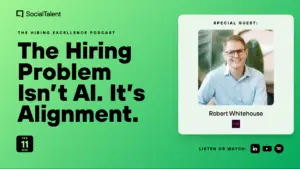
The Hiring Problem Isn’t AI. It’s Alignment
The real bottleneck in hiring isn't technology—it's misalignment between recruiters and hiring managers. Robert Whitehouse, Chief People Officer at MIQ Digital, explains how to rebuild recruiting around shared business understanding and in-person connection.
 Johnny CampbellHost · Co-founder & CEO, SocialTalent
What you'll learn
Balance digital outreach with in-person meetings to close top candidates
Rank interview quality as the top hiring-manager skill to develop
Position recruiters and managers where target talent already gathers in person
Add interview training to manager onboarding, a commonly skipped step
00:00
--:--
Episode notes
Episode key takeaways
Recruiters must understand unit economics: how the business makes money, the value chain from client engagement to profit, and where each role sits in that chain. This isn't abstract business acumen—it's the ability to help candidates envision themselves in the puzzle and understand why their role matters to the bottom line.
Interviewing skill is the highest-leverage capability for hiring managers, outranking selling ability and organizational design. A well-crafted question reveals what the organization values and what the candidate cares about; it sells the culture without a pitch and extracts the data needed to make a confident hire.
In-theater recruiting—showing up where talent congregates (conferences, industry events)—works because the per-capita quality is unmatched. Pair this with geofencing and targeted ads to warm candidates digitally, then deploy your best people on the ground for soft interviews that build pipeline months before roles open.
Alignment between recruiter and hiring manager is the North Star. AI and tools can remove administrative burden to free time for conversations, but technology supercharges capability—it doesn't replace the need for shared expectations, training, and a common language about what good hiring looks like.
Good to know
Frequently asked questions
The quick answers behind this episode.
What does 'business acumen' actually mean for recruiters? +
It means understanding unit economics: the transaction from client engagement to profit, and how each role contributes to that chain. Recruiters who can explain where a candidate fits in the value chain and how their work ties to company revenue can help candidates find meaning and envision themselves succeeding in the role.
How do you train hiring managers to interview better without lengthy courses? +
Integrate interviewing fundamentals into new manager training: how to frame meaningful questions, build a scorecard, define what a strong answer looks like, and communicate standards to interview panels. Pair this with just-in-time toolkits they can reference when they’re actually hiring, not months after training.
How should recruiters and hiring managers work together to source talent? +
Recruiters source and warm candidates digitally; hiring managers represent the company at industry events and conferences, conducting soft interviews to identify prospects. Managers feed qualified names back to recruiters with context, building pipeline months before roles open. This blends digital reach with in-person credibility.
What metrics show if hiring manager and recruiter alignment is working? +
Track qualitative feedback from hiring managers: are they excited about candidate quality? Are they saying ‘I have too many good choices’? Pair this with speed—excited managers move faster through the process. These two signals matter more than funnel statistics because they predict hiring velocity and candidate experience.
Why is in-person recruiting still critical in 2025? +
Humans are social creatures. Candidates want to invest in an organization after seeing real people, not scripts. In-person conversations reveal culture, values, and authenticity that video can’t replicate. For complex hires, especially sales roles, closing the deal requires breaking bread and building trust face-to-face.