New hires make retention decisions in the first 30 days, often in the first week. Attrition data revealed the problem wasn't policy or process—it was the onboarding experience itself, which had devolved into virtual PowerPoint sessions with no measurement of engagement or follow-through.
The Hiring Excellence Podcast · Episode 206
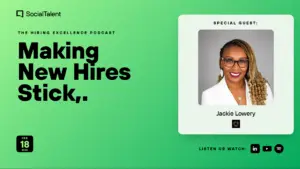
Making New Hires Stick, with Jackie Lowery
Most companies fail to deliver on the promise they make during recruitment. Jackie Lowery shares how Southwire transformed new hire retention by moving from death-by-PowerPoint to immersive, cohort-based onboarding with executive sponsorship—cutting attrition dramatically.
 Johnny CampbellHost · Co-founder & CEO, SocialTalent
What you'll learn
Survey newly hired employees to uncover real onboarding pain points
Redesign onboarding as an immersive mandatory in-person cohort experience
Assign senior executive sponsors to build leadership accountability for retention
Extend onboarding touchpoints and executive engagement throughout the full year
00:00
--:--
Episode notes
Episode key takeaways
The fix required three pillars: storytelling that resonates, intentional connection-building across the organization, and operational readiness. Removing friction—ensuring laptops work, systems are accessible, managers show up—sounds basic but was foundational to engagement.
Cohort-based, in-person onboarding creates instant networks across functions and levels. New hires who arrived together stayed at hotels, networked with peers from finance, engineering, HR, and operations, and met their hiring managers and senior leaders in person—eliminating the isolation that makes it easy to leave.
Executive sponsorship for six months turned retention into a leadership behavior, not an HR task. Each cohort was assigned a C-suite sponsor who checked in regularly, signaling that senior leaders genuinely cared about new hire success and removing the perception that executives were inaccessible.
Measurement at 90, 180, and 365 days revealed early warning signals and allowed for targeted interventions. Tracking engagement scores alongside turnover data—and comparing new hire cohorts to the broader population—proved the program's ROI and justified the investment in travel, hotels, and executive time.
Good to know
Frequently asked questions
The quick answers behind this episode.
How do you get executives to commit time to new hire onboarding for six months? +
Structure and predictability matter. Set fixed onboarding dates every two weeks so executives can block calendars in advance. Frame it as a business imperative—high attrition is a risk to the company. Assign leaders to specific cohorts so they own the outcome. Most importantly, create a culture where leaders see retention as their responsibility, not HR’s. When leaders understand the stakes and have a clear process, they commit.
What should a two-day in-person onboarding program include? +
Day one focuses on belonging and culture: cohort networking, meals together, meetings with hiring managers and senior leaders, and storytelling about the company’s mission. Day two covers job readiness: IT equipment setup, system access, role clarity, and often a volunteer activity tied to company values. The cohort stays together at a hotel to build bonds. This creates both emotional connection and operational readiness.
How do you measure onboarding success beyond turnover? +
Track engagement scores for new hires at 30, 90, 180, and 365 days using surveys. Segment new hire data separately in engagement surveys to compare against the broader workforce. Monitor readiness metrics—equipment delivery, system access, manager check-ins. Collect qualitative feedback through focus groups. Look for early warning signals of disengagement so you can intervene before someone leaves.
What happens after the two-day onboarding event? +
Onboarding becomes a year-long journey. Cohorts reconnect via group calls and chat channels to discuss challenges. Executive sponsors maintain touch points for at least six months. HR business partners monitor survey data and flag issues to local managers. The goal is sustained connection and support, not a one-time event. This prevents the fade-out that typically happens after day one.
How do you build an instant network for new hires across the organization? +
Mix functions and levels intentionally in cohort groups. An engineer sits with finance, HR, operations, and safety professionals. This creates cross-functional relationships from day one. Add executive sponsorship and structured networking events. New hires leave knowing people throughout the company, not just their immediate team. This network becomes a safety net—they’re less likely to leave if they feel known and connected across the business.