Adaptability is not one skill but a constellation of attributes: learning orientation, proactive mindset, willingness to take risks, ability to see the bigger picture, resilience, and emotional regulation. Assessing for it means digging into each facet separately during selection, not treating it as a single checkbox.
The Hiring Excellence Podcast · Episode 10
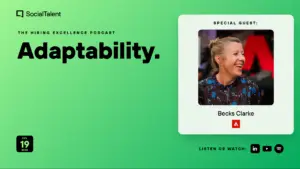
Adaptability with Becks Clarke
Adaptability isn't a single trait—it's a family of skills including resilience, learning agility, and risk tolerance. Bex Clark reveals how to assess for it, why organizational culture makes or breaks it, and what hiring leaders must do differently.
 Johnny CampbellHost · Co-founder & CEO, SocialTalent
What you'll learn
Build systemic scenario plans for multiple future crises before they hit
Structure teams small to increase organizational speed and adaptability
Assess adaptability as a family of distinct skills, not one trait
Recognize a risk-averse culture blocks adaptive behavior despite individual mindset
00:00
--:--
Episode notes
Episode key takeaways
Hiring for adaptability without building a culture that rewards it is futile. If an organization punishes failure, discourages risk-taking, or lacks psychological safety, even the most adaptable candidate will revert to rigid behavior within months. The soil matters as much as the seed.
Scenario planning and agile methodologies aren't just operational tools—they're adaptability accelerators. Small teams, two-week sprint cycles, and a clear North Star purpose teach people to embrace change as normal rather than exceptional, creating muscle memory for the unexpected.
Purpose alignment unlocks motivation for change. Reframing a role around what it serves—not just what it is—helps people see themselves in new contexts. An Uber driver isn't stuck; they move people. That mindset shift opens pathways others miss.
Tenure in role has collapsed to 12–18 months on average, and lateral moves now define career progression. Organizations that treat this as a threat rather than an opportunity to build adaptability into their culture will lose bright talent to competitors who embrace it.
Good to know
Frequently asked questions
The quick answers behind this episode.
How do you assess for adaptability in interviews and selection? +
Build a picture of the multiple facets that compose adaptability—resilience, learning orientation, risk tolerance, purpose alignment—rather than assessing it as a single trait. Dig behind each component through your selection process. Ask behavioral questions about how candidates have handled failure, learned from mistakes, and shifted approaches when circumstances changed.
Can you teach someone to have a growth mindset? +
You can hone and develop a growth mindset, but you cannot teach it outright. The individual must want it. What organizations can do is create environments where risk-taking is safe, failure has no consequences, and people are actively involved in problem-solving. That environment is what unlocks growth mindset in those who are willing.
What's the relationship between agile and adaptability? +
Agile—in its truest sense of being nimble and quick—is foundational to adaptability. Small team sizes, short sprint cycles, and a focus on business value rather than task completion teach people to embrace change as normal. These practices build the organizational muscle memory needed to respond well when crisis or disruption hits.
Why do high-potential hires fail in organizations that claim to want adaptability? +
Culture mismatch. Organizations often hire for adaptability but then signal the opposite through structure, leadership behavior, and risk aversion. If the culture actively discourages the very behaviors you hired for—experimentation, speaking up, lateral thinking—talented people leave. Alignment between hiring criteria and organizational reality is non-negotiable.
How should individuals develop adaptability in their careers? +
Seek opportunities to test yourself in unfamiliar contexts. Push yourself into roles or projects that stretch you. Don’t wait for permission or the perfect role; actively look for chances to build resilience, learn new skills, and work across different teams. Tenacity and a willingness to try matter more than perfect preparation.