Traditional hiring screens people out based on exact job matches; pathways hiring screens people in by identifying transferable skills and trainable capabilities. This inverse approach requires fundamentally different interview processes, hiring manager mindsets, and a commitment to development over plug-and-play hiring.
The Hiring Excellence Podcast · Episode 108
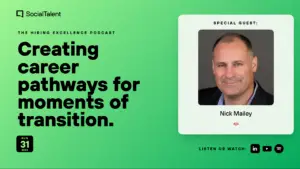
Creating career pathways for moments of transition | with Nick Mailey
Equinix's VP of Talent Acquisition shares how to tap underutilized talent pools, cut acquisition costs in half, and double diversity—without sacrificing quality or speed.
 Johnny CampbellHost · Co-founder & CEO, SocialTalent
What you'll learn
Screen in for transferable skills instead of screening candidates out
Rebuild interview processes rather than assume traditional interviews still work
Expect early failures and pilot before scaling new talent channels
Track diversity and cost gains from alternative hiring channels
00:00
--:--
Episode notes
Episode key takeaways
Scale doesn't come from applying one generic approach everywhere. It comes from identifying specific landing zones—roles and geographies where a cohort is most likely to succeed—then building repeatable processes around those zones. Equinix went from 10 hires in year one to 700+ by mapping military, athlete, and career-transition talent to defined roles and training pathways.
Nick emphasizes that this is not a quick win. Early ROI is negative; partnerships fail; interview processes need rework. Success requires executive sponsorship, willingness to make trade-offs in team structure, and patience to iterate until product-market fit emerges.
The economics are compelling once scaled: half the cost of traditional acquisition, 2x the diversity, and measurably higher engagement from hiring managers who see the commitment and loyalty these candidates bring. But the upfront investment is substantial and non-negotiable.
Bringing stakeholders into the process—L&D, talent management, HR business partners, and business leaders—slows early momentum but hardens the practice. Debriefs where leaders participate directly are where interview redesign and capability redefinition actually happen.
Good to know
Frequently asked questions
The quick answers behind this episode.
How do you identify which roles are suitable for pathways hiring? +
Start with landing spots where the organization already invests in development—new-to-career roles, entry-level positions, or areas with high training infrastructure. Map specific geographies and business needs, then define the recruiting motion (channels, interview process, assessment criteria) for each cohort before scaling.
What skills should you assess for in non-traditional candidates? +
Focus on transferable and soft skills: problem-solving, communication, adaptability, and learning agility. Identify what’s trainable (technical depth, domain knowledge) versus what’s harder to teach (resilience, coachability, work ethic). This requires retraining interviewers to think about potential, not just past experience.
How do you get hiring managers to embrace pathways hiring? +
Senior leaders must participate in interview debriefs and coach line managers on thinking differently about talent. Share success stories and impact quotes from both hiring managers and new hires. Over time, visible wins and measurable commitment from the organization build internal momentum and reduce resistance.
What partnerships or programs work best for sourcing? +
Military programs like DoD SkillBridge (which covers training costs for six months), professional athlete transition programs, and nonprofits serving underrepresented populations are proven channels. Success depends on matching the right partner to the right role and geography; expect to test multiple partnerships before finding fit.
What's the real cost difference between pathways and traditional hiring? +
Pathways hiring costs roughly half what traditional acquisition costs once scaled. Early investment is high and ROI is negative, but programs like SkillBridge offset costs by covering training. The payoff comes through volume, reduced attrition, and lower sourcing spend per hire over time.