Proximity bias is real and corrosive. People in the office build deeper bonds through casual encounters—lunch, hallway chats, spontaneous moments—while remote workers risk becoming invisible. Leaders must consciously design moments where distributed teams feel equally part of the community, not like they're watching from the sidelines.
The Hiring Excellence Podcast · Episode 100
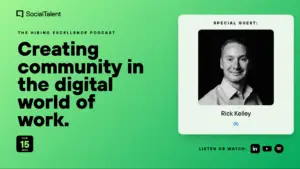
Creating community in the digital world of work | with Rick Kelley
Remote and hybrid work aren't going away—but they're reshaping how leaders build culture and inclusion. Rick explores why proximity bias, onboarding equity, and behavioral management matter more than diversity metrics alone.
 Johnny CampbellHost · Co-founder & CEO, SocialTalent
What you'll learn
Spot proximity bias that gives in-office employees more attention than remote peers
Build onboarding programs that give every new hire equal early attention
Recognize why remote work suits many employees with disabilities better
Prioritize managing behaviors over raw outcomes to drive fairer results
00:00
--:--
Episode notes
Episode key takeaways
Hybrid work unlocks access to talent and inclusion simultaneously. Removing the requirement to relocate or commute full-time opens doors for people with disabilities, caregiving responsibilities, LGBTQ+ employees who feel safer at home, and neurodivergent workers who thrive in visual, asynchronous environments. The business case and the equity case align.
Behavioral management beats outcome chasing. Rick's gaming team moved from 23% female representation (industry baseline) to over 50% by focusing on process—ensuring underrepresented candidates in every pipeline, diverse interview panels, and meaningful feedback loops—rather than setting targets and hoping. When you manage the behaviors, the outcomes follow.
Onboarding remotely requires deliberate design. New hires joining during lockdowns never experienced company culture firsthand. Metaverse-style immersive environments or structured cohort onboarding can level the playing field so remote and in-office starters get the same cultural foundation and sense of belonging from day one.
Small gestures compound. A manager who never says hello in the hallway creates invisible distance; one who smiles and asks how your day is going signals you matter. In hybrid settings where touchpoints are fewer, personability and intentional recognition become disproportionately powerful.
Good to know
Frequently asked questions
The quick answers behind this episode.
How do you prevent proximity bias in hybrid teams? +
Design moments where remote and in-office employees participate equally. Include remote panelists in all-hands meetings, set clear office days for team collaboration (e.g., Mondays), and create social events around shared interests—not just alcohol-fueled happy hours. Make it fun to be in the office without penalizing those who work remotely.
What are the DEI benefits of remote and hybrid work? +
Remote work removes barriers for people with disabilities, caregivers, LGBTQ+ employees who feel safer at home, and neurodivergent workers who prefer visual or asynchronous communication. It also expands recruitment beyond office locations, bringing jobs to underserved geographies and enabling talent mobility across borders without relocation.
How should leaders manage performance in hybrid environments? +
Set clear goals and track progress toward them, not activity or time-in-seat. Use mid-cycle check-ins with peer feedback to ensure underrepresented employees get coaching and visibility. Focus on behaviors—how people navigate conversations, lead with empathy, build relationships—not just revenue or metrics, which can drive unhealthy short-term decisions.
What's the difference between managing behaviors vs. outcomes? +
Managing outcomes (e.g., revenue targets) can incentivize corner-cutting or unsustainable practices. Managing behaviors (e.g., ensuring diverse interview panels, meaningful client relationships, strategic thinking) creates a foundation for long-term success. When behaviors are right, outcomes follow naturally and sustainably.
How can the metaverse improve hybrid work and inclusion? +
Immersive 3D environments like Meta’s Horizon allow remote workers to feel physical proximity—seeing avatars, hand movements, high-fives—and participate in shared spaces (conference rooms, events) without travel. This bridges the gap between Zoom fatigue and in-person connection, and can level onboarding experiences for all new hires regardless of location.