Job advertisements are the first barrier. Inaccessible career pages, tokenistic stock imagery, and vague competency language filter out candidates before they apply. Shift to specific, gender-neutral, jargon-free descriptions that state your DEI commitment upfront and explicitly invite underrepresented applicants to apply even if they don't meet every requirement.
The Hiring Excellence Podcast · Episode 133
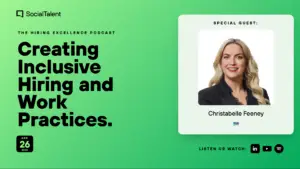
Creating Inclusive Hiring and Work Practices | with Christabelle Feeney
Diversity without inclusion is incomplete. Christabelle Feeney breaks down how to embed equity into every hiring stage and create belonging that actually sticks—from job ads to onboarding and internal mobility.
 Johnny CampbellHost · Co-founder & CEO, SocialTalent
What you'll learn
Rewrite job ads to drop tokenistic stock imagery and vague requirements
Shift interviews from screening people out to screening candidates in
Involve employee resource groups directly in shaping core hiring policies
Survey candidates early, including those who dropped out before an interview
00:00
--:--
Episode notes
Episode key takeaways
Screening in, not screening out, unlocks skills-based hiring. Rather than hunting for reasons to reject, look for the value and diversity in each CV—recognizing that experience gaps don't predict job performance, especially for people from marginalized backgrounds who may lack opportunity rather than capability. Similarity bias and culture fit language are proxies for homogeneity; replace them with concrete, decision-making values that any background can demonstrate.
Interview panels must be trained, diverse, and structured. Competency-based questions, accommodation offers, and panel diversity matter; two-pronged questions under pressure exclude neurodivergent and non-native English speakers. Christabelle emphasizes that onboarding is not the end—follow through with the same support you provided during hiring, or performance problems become retention problems.
Inclusion and diversity are not interchangeable. An organization can be diverse yet exclusionary, or inclusive yet homogeneous. Both require active, deliberate work: diversity often needs targeted recruitment and partnerships with community organizations; inclusion demands internal policies, ERG involvement in core decisions, buddy systems, and reasonable accommodation frameworks that signal belonging.
Feedback loops close the equity gap. Survey candidates as early as possible—especially those who drop out before interviews—to uncover unknown barriers. Close the loop by telling people what you did with their feedback. Mentorship, job shadowing, and direct partnerships with organizations serving marginalized communities build awareness and create pathways that job boards alone cannot reach.
Good to know
Frequently asked questions
The quick answers behind this episode.
What makes a job advertisement more inclusive? +
Ensure your careers page is accessible, avoid stock imagery, use gender-neutral language, define competencies clearly, and avoid jargon. State your DEI commitment explicitly and invite candidates who don’t meet every requirement to apply. Offer alternative application formats and reasonable accommodations upfront to signal genuine inclusion.
How do you avoid similarity bias in hiring? +
Move from screening out (finding reasons to reject) to screening in (identifying value and diversity). Recognize that different qualifications don’t predict job fit. Replace culture fit with concrete, decision-making values. Involve diverse interview panels trained in DEI, ask competency-based questions, and assess for alignment with organizational values, not familiarity.
What's the difference between diversity and inclusion? +
Diversity is who you hire; inclusion is how they feel when they arrive. You can have a diverse workforce with no sense of belonging, or an inclusive culture with limited diversity. Both require separate tactics: diversity often needs targeted recruitment; inclusion demands internal policies, ERGs in decision-making, buddy systems, and accommodation frameworks that signal value.
How should organizations support internal candidates for promotion? +
Provide the same coaching and interview prep external candidates receive. Offer job shadowing and feedback on the application process. Survey internal applicants early to uncover barriers. Create mentorship programs and reasonable accommodation passports so employees feel supported in seeking advancement, reducing attrition and building equity within the organization.
Why does onboarding matter for inclusive hiring? +
Hiring effort means nothing if support ends after day one. Without follow-through, performance issues emerge that are actually support gaps. Ensure new hires know DEI policies, have a buddy, understand accommodation processes, and feel valued. This continuity reduces turnover by up to 50% and increases job performance by up to 56%, according to research cited.