The shift to digital talent identification in early career hiring isn't coming—it's already here. Handshake moved from 11,000 physical career fairs annually to 2,000 virtual ones in a single season, mirroring the entire distribution of recruiting activity from in-person to online. This acceleration, driven by COVID, has fundamentally changed how employers can source and engage students at scale.
The Hiring Excellence Podcast · Episode 24
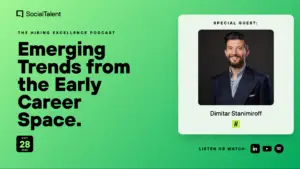
Emerging Trends from the Early Career Space with Dimitar Stanimiroff
Handshake's Head of EMEA shares what 7M students reveal about Gen Z work expectations, virtual hiring, and why 34% of employers still miss the deadline to publish schedules.
 Johnny CampbellHost · Co-founder & CEO, SocialTalent
What you'll learn
Publish employer schedules early to prevent no-show drop-off at virtual fairs
Design virtual fairs around pre-scheduled matched sessions rather than queues
Expect most early-career candidates to accept fully remote roles readily
Avoid clunky application steps since candidates show zero tolerance for friction
00:00
--:--
Episode notes
Episode key takeaways
Eighty-four percent of students surveyed said they'd happily work remotely, and 75% confirmed they're able to do so from home. Yet a third of employers still fail to publish their hiring schedules until a week before virtual fairs, creating a massive conversion gap between student registration and actual session bookings. The bottleneck isn't candidate willingness—it's employer readiness.
Gen Z's mobile-first, creator-economy mindset reshapes expectations around work itself. This generation aspires to multiple income streams and sees remote work not as a compromise but as a natural fit for their lifestyle. They have zero tolerance for friction in hiring experiences—slow apps, virtual queues, or multi-step processes—regardless of how badly they need a job.
Mental health strain is widespread: 9 in 10 students reported COVID negatively affected their wellbeing, and a third live in constant fear of not finding work post-graduation. This anxiety is driving a 16-point jump in gig economy interest (54% to 70%), signalling that early-career talent is prioritizing income security over traditional employment.
Pre-scheduling virtual interviews and one-on-one sessions—rather than replicating physical fair chaos online—creates both efficiency and authenticity. Employers who target specific student profiles in advance waste less time, students get relevant conversations without queuing, and both sides benefit from intentional matching instead of serendipity.
Good to know
Frequently asked questions
The quick answers behind this episode.
Why are students not booking sessions at virtual career fairs? +
A third of employers don’t publish their hiring schedules until a week before the fair, leaving students unable to book time slots. Students register for events but then browse employer schedules to book sessions—if schedules aren’t live, they can’t commit. Publishing schedules early directly increases conversion from registration to actual bookings.
Are Gen Z graduates ready for remote internships and jobs? +
Yes. Eighty-four percent of students surveyed said they’d consider remote work, and 75% confirmed they’re able to work from home. This generation grew up mobile-first and digital-native, making virtual work feel natural rather than a compromise. They expect seamless digital experiences and have low tolerance for friction in hiring processes.
How has COVID changed early career hiring permanently? +
The shift from physical to digital talent identification and engagement is here to stay. Video interviews increased 2,500% in a single month. Asynchronous video assessment, pre-scheduled virtual sessions, and online sourcing are now standard. Employers who continue to rely on reactive, post-and-pray job posting will fall behind those using proactive digital sourcing.
What's driving gig economy interest among graduates? +
Fear of unemployment post-graduation and mental health strain are pushing students toward income diversification. Interest in gig work jumped from 54% to 70% during the pandemic. This generation already aspires to multiple income streams—they see themselves as creators and entrepreneurs, not single-employer employees.
How should employers design virtual career fairs differently? +
Don’t replicate physical fairs online. Instead, focus on pre-scheduling, targeted student outreach, and one-on-one sessions rather than open booths and queues. Let employers select which students they want to meet based on profile data. This eliminates wasted time, improves candidate relevance, and supports diversity hiring objectives.