Start from a position of belief, not suspicion. Assuming people will do good work and giving them the benefit of the doubt—rather than building a blame culture—creates the psychological safety needed for teams to take ownership and innovate under pressure.
The Hiring Excellence Podcast · Episode 153
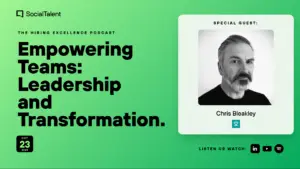
Empowering Teams: Leadership and Transformation with Chris Bleakley
Chris Bleakley shares how Spire Healthcare transformed its resourcing function from outsourced underperformance to a high-trust, data-driven operation. Learn the leadership playbook for TA turnarounds in complex, multi-location environments.
 Johnny CampbellHost · Co-founder & CEO, SocialTalent
What you'll learn
Lead by trusting your team instead of starting from suspicion
Invest in reliable data first so you can tell your story with credibility
Organize recruiters by site rather than vacancy type to build relationships
Diagnose the real blocker behind a stalled hire instead of blaming recruiters
00:00
--:--
Episode notes
Episode key takeaways
Data is the credibility layer for culture. Reducing vacancies by 50%, cutting time-to-hire in half, and slashing agency spend by a significant margin only matters if you can prove it. Chris invested heavily in data infrastructure early, then used those metrics to reinforce team wins and defend against anecdotal criticism from stakeholders.
Visibility and communication are half the job. Spending more time with the team than on strategy, holding drop-in sessions, sending weekly updates, and bringing a dispersed 45-person team together twice yearly—these aren't nice-to-haves. They're the foundation that lets leaders understand blockers (salary misalignment, interview no-shows, poor manager availability) that have nothing to do with recruiting.
Organisational structure must mirror business structure. Aligning recruiters to hospital locations rather than vacancy types meant they became known faces to hiring managers, built relationships, and could diagnose local hiring challenges. Misalignment between TA structure and business structure guarantees friction.
Defend your team before you defend your metrics. When 80% of problems come from 20% of locations, the leader's job is to support the recruiters working those difficult accounts—not blame them. That trust translates into the team's willingness to tackle impossible timelines, like staffing a new clinic in under a week.
Good to know
Frequently asked questions
The quick answers behind this episode.
How do you build culture in a remote, dispersed TA team? +
Combine in-person gatherings twice yearly with constant low-friction touchpoints: weekly Friday updates, drop-in video sessions (not just work-focused), dedicated Slack channels for wellbeing, and regular town halls. The goal is to make people feel part of one team despite working across 38 locations. Visibility and consistency matter more than frequency.
What data should TA leaders prioritize when taking over a function? +
Start with vacancy trends, time-to-hire, and cost-per-hire. Then layer in location-level performance, candidate source effectiveness, and retention by hire cohort. The real insight comes from comparing perception (what stakeholders believe) against reality (what data shows). Many myths—like ‘this hospital always has staffing problems’—evaporate under scrutiny.
How do you identify and fix blockers that aren't recruiting problems? +
Dig into the data by location and role. You’ll often find the issue isn’t candidate scarcity but interview no-shows, salary misalignment with market rates, or manager unavailability. Once identified, escalate these as business problems (reward, operations, leadership) rather than TA failures. This shifts the conversation from blame to collaboration.
How should a new TA leader approach their first 90 days? +
Observe before acting. Talk to people, understand what’s already working, and communicate your thinking early. Identify key allies who can help you move fast. Invest in data infrastructure immediately—it’s your credibility foundation. Position improvements incrementally and honestly, backed by metrics, not anecdotes.
How do you use data to motivate and engage recruiters? +
Gamify challenges based on data insights. If pharmacy requisitions are aging, make that the weekly competition. Share the same metrics with your team that you share with executives—first. Celebrate wins transparently (50% vacancy reduction, 300 additional nurses hired) so the team owns the success, not just the leader.