Being ghosted at final-stage interviews—after multiple rounds and genuine investment—is the extreme end of poor candidate experience. Ryan experienced this a dozen times across 300 applications, and it forced him to internalize whether he'd done something wrong. The damage isn't just reputational; it changes how candidates show up in subsequent conversations, making them guarded rather than authentic.
The Hiring Excellence Podcast · Episode 178
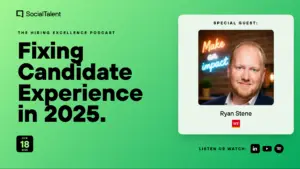
Fixing Candidate Experience in 2025 with Ryan Stene, Wells Fargo
Ryan Stene shares his experience being ghosted at final-stage interviews and how it transformed his approach to candidate experience at Wells Fargo. A candid look at what happens when TA leaders walk in candidates' shoes.
 Johnny CampbellHost · Co-founder & CEO, SocialTalent
What you'll learn
Identify four or five key moments that most impact candidates
Send Friday updates so candidates always know where they stand
Use pre-application AI chat to reduce mismatched candidate applications
Master the basics before layering in new recruiting technology
00:00
--:--
Episode notes
Episode key takeaways
Focus on four or five key moments that matter, not perfecting all 25 steps in your process. Ryan calls these your 'ten commandments'—the non-negotiables where recruiter knowledge, candidate communication, and transparency must shine. Technology and recruiters can't be great at everything, so pick the moments where you want to stand for something and commit to them.
Friday philosophy is a scalable practice: every Friday, recruiters update both hiring managers and candidates on where they stand. For candidates, it's a simple message—'You're still in process, round two complete, final interview Tuesday, we'll touch base by week's end.' This costs almost nothing but eliminates the silence that breeds anxiety and doubt.
Authenticity and transparency in employer branding now means raw employee testimonials over polished production—video on demand with employees in their element, imperfect and real. Wells Fargo is moving toward job-specific videos and day-in-the-life content that shows who actually works there, not a curated brand fantasy.
Candidate experience is employer brand. What candidates feel during hiring is who you are on the street. Glassdoor reviews, word-of-mouth, and social signals all flow from how you treat people in the process. Block and tackle the fundamentals first—communication, feedback, transparency—before layering in new technology.
Good to know
Frequently asked questions
The quick answers behind this episode.
What should you do when you ghost a candidate at final stage? +
Acknowledge it happened and commit to never doing it again. Set a policy: if you’ve communicated via email, reject via email; if by phone, call. Offer personalized feedback by phone even if most decline—the offer itself signals respect. Document your non-negotiables and hold your team accountable to them.
How do you scale candidate communication without burning out recruiters? +
Use Friday philosophy: a weekly touchpoint where recruiters update candidates on process status and timing. Automate initial confirmations (‘We got your application, here’s what’s next’) but keep key moments human. Implement technology that reduces applicant volume upfront—AI screening on career sites that redirects poor-fit candidates to better roles before they formally apply.
How can AI improve candidate experience without replacing human judgment? +
Use AI for personalization, transparency, and scale—not gatekeeping. Personalized career site experiences, chatbots that answer benefits questions anonymously, job recommendation engines that show match percentages and missing skills. Embed Glassdoor insights into chatbots so candidates see real employee feedback, not sanitized company copy. Keep the human element in final decisions and feedback.
What's the difference between candidate experience and employer brand? +
Candidate experience is what people feel during hiring; employer brand is what they tell others afterward. They’re inseparable. Poor experience during recruitment becomes negative word-of-mouth, Glassdoor reviews, and social signals that damage your ability to attract talent. Your hiring process is your brand in action.
How do you handle high-volume applications without ghosting candidates? +
Set expectations upfront: show candidates how many applications you’ve received and how long the process will take. Use AI to reduce applicant flow by redirecting poor fits before they apply. Commit to communication channels—if you email, you reply by email; if you phone screen, you reject by phone. Offer feedback for candidates who reach phone or final stage, even if most decline.