Sixty-seven percent of production supervisor job postings require a bachelor's degree, yet only 16% of people in those roles hold one. This gap between stated requirements and actual job success is a systemic barrier that reverse-engineering job descriptions—starting with deliverables and skills, not credentials—can eliminate.
The Hiring Excellence Podcast · Episode 60
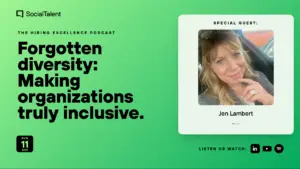
Forgotten diversity: Making organizations truly inclusive | with Jen Lambert
Social class is the forgotten dimension of diversity—and addressing it unlocks talent pools most organizations ignore. Jen Lambert explains why skills-based hiring, flexible schedules, and career pathing matter more than credentials.
 Johnny CampbellHost · Co-founder & CEO, SocialTalent
What you'll learn
Strip job requirements down to the actual skills a role needs
Redesign shift start times to unlock a far larger talent pool
Remove blanket barriers like drug testing that shrink the applicant pool
Tap the formerly incarcerated talent pool many employers overlook
00:00
--:--
Episode notes
Episode key takeaways
Socioeconomic background is invisible compared to race or gender, which is precisely why it gets overlooked in DEI efforts. Shame, lack of visibility, and cultural silence around poverty mean organizations rarely prioritize social mobility despite data showing it correlates with higher GDP per capita and broader inclusion gains.
Jen Lambert's staffing firm hires recruiters almost exclusively on trainability and potential rather than experience, looking for people who enjoy connecting with strangers and have a track record of making things happen. The model works because it focuses on environment fit—people who thrive in systems and process-driven cultures—not just isolated skills.
Simple operational changes unlock enormous talent pools: shifting factory start times from 6 AM to 8 AM, offering flexible shift selection, and removing marijuana from drug-test requirements all reduce barriers without harming productivity. These moves disproportionately benefit workers managing childcare or transportation constraints.
Opening hiring to people with criminal convictions—particularly those serving long sentences—yields high retention and gratitude because the stakes of re-offending are steep. One foundry with nearly zero turnover in a department of formerly incarcerated workers found they were more committed to staying employed than any other cohort.
Good to know
Frequently asked questions
The quick answers behind this episode.
What is skills-based hiring and how does it differ from traditional resume screening? +
Skills-based hiring maps job qualifications to actual success in the role rather than relying on education pedigree or credentials. It strips out unnecessary requirements, focuses on trainability and demonstrated capability, and asks: can this person learn the skill? This approach makes roles more fillable and opens opportunity to candidates without traditional backgrounds.
Why do employers require degrees for jobs where most incumbents don't have them? +
Often it’s habit—filling in a template without reverse-engineering what the role actually needs. Some employers use degree requirements to discourage ‘unqualified’ applicants, but this backfires by shrinking the talent pool and excluding capable candidates. Defining skills and experience instead of credentials yields better hiring outcomes.
How can employers support workers from lower socioeconomic backgrounds without asking invasive questions? +
Redesign work conditions to remove hidden barriers: offer flexible scheduling, shift choice, reliable transportation access, and paid internships. These changes don’t require identifying who needs help—they benefit everyone while removing obstacles that disproportionately affect lower-income workers managing childcare, transport, or caregiving responsibilities.
What barriers prevent people from lower socioeconomic backgrounds from advancing to leadership? +
Career pathing exists but often requires employees to self-advocate—a cultural norm unfamiliar to many from lower-income backgrounds. Proactive sponsorship, visible examples of internal mobility, and leadership actively identifying and developing talent removes the burden of self-promotion and accelerates advancement for overlooked high-potential employees.
How should companies measure progress on socioeconomic diversity? +
Start by asking: do you collect self-identified data on socioeconomic background? Most don’t, making measurement impossible. Track social mobility metrics—percentage of entry-level hires who advance, pay progression by cohort, retention by background. This reveals whether your organization is genuinely opening doors or just hiring entry-level workers who never move up.