The shift to remote work held up a mirror to organizational dysfunction. What was broken in-office became unbearable at a distance; the natural social interactions and hallway conversations that masked poor management are gone, forcing leaders to design intentionally for connection, belonging, and trust.
The Hiring Excellence Podcast · Episode 26
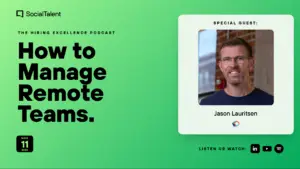
How to Manage Remote Teams with Jason Lauritsen
Remote work has exposed leadership dysfunction. Jason Lauritsen breaks down why trust, clear expectations, and deliberate relationship-building are non-negotiable for managing distributed teams—and why most managers still don't understand their actual job.
 Johnny CampbellHost · Co-founder & CEO, SocialTalent
What you'll learn
Replace one-way email pushes with genuine two-way conversation
Apply the relationship test before delivering tough feedback or reviews
Build trust with remote reports through consistent one-to-one check-ins
Design deliberate rituals to replace lost hallway conversations
00:00
--:--
Episode notes
Episode key takeaways
Communication is a two-way conversation, not information broadcast. Managers commonly misinterpret 'communicate more' as pushing out more emails, overwhelming already-stressed teams. The real work is checking in relationally—asking how someone's energy level is on a one-to-ten scale, listening, and adjusting support based on what you hear.
Jason argues that a manager's job is not to produce; it's to enable others to produce. Promotion typically rewards individual performance, sending the wrong signal: keep doing what made you successful. In reality, the role demands a complete shift—spending time building relationships, giving feedback, and removing blockers becomes the full-time job.
Asynchronous communication and documentation replace synchronous meetings as the default. Record video updates instead of scheduling live meetings when no discussion is needed; post information in searchable, revisable formats so people can consume it on their own schedule and timezone, freeing capacity for genuine connection.
Clarity of expectation and intention solves most remote management problems. When people know what matters, what's expected of them, and why, the need for surveillance evaporates. Trust emerges naturally, and it becomes obvious which meetings are necessary and which are theater.
Good to know
Frequently asked questions
The quick answers behind this episode.
How do you build trust with remote team members you've never met in person? +
Time is the currency of relationships. Invest consistent one-on-ones focused on how people are doing, not just what they’re doing. Use frameworks like Steven Covey’s Speed of Trust: be clear about your intentions, follow through on commitments, communicate in verifiable ways so people don’t have to take your word for it, and ask for feedback about what they need from you as a manager.
What's the difference between micromanaging and checking in on remote employees? +
Micromanaging assumes distrust; checking in builds it. Ask relational questions—energy level, distractions at home, how they’re doing—not just task status. When you understand people as whole humans and give them permission to tell you when it’s too much, you create psychological safety. The key is being in conversation, not surveillance.
Should daily standups replace weekly meetings for remote teams? +
Daily standups serve a different purpose than weekly syncs. They compensate for lost hallway conversations by creating connection and a sense of belonging at the start of the day. They also enable alignment on what matters most. But the purpose depends on context—understand what your team actually needs before defaulting to daily meetings.
How do you onboard and build relationships with new hires who start remotely? +
Deliberate replacement of in-office social interaction is essential. Set clear intentions upfront: tell new hires your goal is to be the best manager they’ve ever had, and ask them to give you honest feedback so you can deliver. Schedule regular one-on-ones, create optional company gatherings (breakfast, quarterly events), and invest in quarterly or annual in-person time if possible to deepen relationships.
What should companies decide now about hybrid or remote work post-pandemic? +
Make a clear decision and communicate it now—don’t wait for certainty. Decide whether you’re primarily office-based, remote-first, or hybrid, then design meeting schedules and culture accordingly. Uncertainty kills engagement and productivity. Ask employees what they want, consider your business needs, and commit to a direction. Indecision is worse than any choice.