Bad hire rates at senior levels dropped from 20–25% to less than 2% after implementing top grading principles—a methodology that prioritizes pattern recognition across a candidate's entire career history rather than isolated interview performance. The shift required structured chronological interviews (called SIDS interviews) that dig into transitions, leadership evidence, and consistency of high achievement.
The Hiring Excellence Podcast · Episode 62
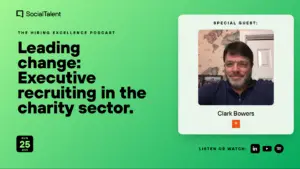
Leading change: Executive recruiting in the charity sector | with Clark Bowers
Clark Bowers, Director of Talent Acquisition at World Vision, shares how implementing top grading methodology reduced bad hire rates at the national director level from 25% to under 2%. Learn why leadership quality is the foundation of retention and organizational impact.
 Johnny CampbellHost · Co-founder & CEO, SocialTalent
What you'll learn
Signal upfront that every reference claim will be verified
Apply top-grading interviews to cut bad senior hires dramatically
Probe career transitions to test whether a candidate's story holds up
Build a professional development plan for every person on your team
00:00
--:--
Episode notes
Episode key takeaways
Great leadership is a talent magnet. When leaders are genuinely strong, they attract and retain high performers naturally, which solves most attrition problems before they start. This insight reframes retention from a compensation or flexibility issue into a leadership quality issue.
Reference checks are not a formality—they're a verification mechanism called TORQUE (threat of reference check) that surfaces inconsistencies early. Asking candidates upfront which supervisors you'll contact, and then actually contacting them across multiple years, reveals whether someone maintains networks and whether their narrative holds up under scrutiny.
Emergency response roles are the most competitive talent segment in the NGO world. Building a pre-vetted emergency relief roster of candidates identified and certified during calm periods allows organizations to deploy qualified people into crisis zones within days rather than weeks—a direct impact on lives saved.
Internal mobility requires both culture and systems. Without a shared HRIS and visibility across a federated organization, talent stays siloed and external hiring inflates unnecessarily. Clark's organization is moving toward a unified people and culture council to surface rising talent and create lateral opportunities before external recruitment becomes the default.
Good to know
Frequently asked questions
The quick answers behind this episode.
What is top grading and how does it reduce bad hires? +
Top grading is a methodology that identifies high performers by looking for patterns of leadership, excellence, and high achievement across a candidate’s entire career. It uses structured chronological interviews (SIDS interviews) and reference checks to verify consistency. The approach focuses on transitions, leadership evidence in multiple contexts, and whether former supervisors actively recruit the candidate—signals that predict on-the-job success.
How do you source passive candidates in competitive emergency response roles? +
Building a pre-vetted emergency relief roster during non-crisis periods allows organizations to identify and certify candidates on speculation. When crises occur, these candidates are contacted first and fast-tracked to field assignments. Passive sourcing training helps teams identify high-demand talent before competitors do, especially in sectors where good people are actively employed elsewhere.
Why do leaders leave nonprofits after taking a pay cut? +
Purpose and impact drive retention more than salary in mission-driven sectors. People who transition from for-profit roles report finding immense satisfaction in seeing direct change at field level. When leaders cast a compelling vision and stay connected to the organization’s mission, employees stay engaged—even at lower compensation—because the work feels meaningful.
How can internal mobility reduce external executive hiring? +
Many organizations hire externally while overlooking internal talent because they lack visibility across departments or a federated structure. A shared HRIS, people and culture council, and cross-functional exposure programs surface rising talent early. Encouraging lateral moves and professional development plans for high performers reduces unnecessary external search costs and improves retention and diversity.
What should managers do when high performers don't get promoted? +
Instead of protecting team members from internal competition, managers should support their career goals across the organization. When someone doesn’t get a role, explore alternative opportunities where they can fully exercise their abilities. This mindset—treating people as valuable and supporting their growth—builds loyalty and often brings people back later in their careers.