The performative era of DEI is over. Where organizations once competed on diversity metrics and public commitments, the focus has shifted to defensible hiring processes that eliminate bias without drawing regulatory scrutiny. The work continues—the spotlight simply moves off it.
The Hiring Excellence Podcast · Episode 173
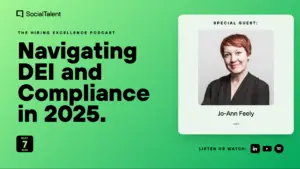
Navigating DEI and Compliance in 2025 with Jo-Ann Feely
The executive order has forced a reckoning. Organizations are renaming DEI programs, removing slates, and reframing equity as fairness—but the business case for inclusive hiring hasn't changed. Jo-Ann Feely explains how to stay compliant while keeping your culture intact.
 Johnny CampbellHost · Co-founder & CEO, SocialTalent
What you'll learn
Expect younger candidates to quit the process without visible purpose messaging
Build a defensible, bias free hiring process regardless of DEI politics
Keep fair hiring practices intact while retiring performative DEI measurement
Watch for top talent exits once employees feel values were compromised
00:00
--:--
Episode notes
Episode key takeaways
Rebranding is real, but practice persists. Many TA leaders are renaming DEI roles to 'culture' or 'inclusion' and removing controversial language from job boards and career sites. Yet the underlying commitment to fair, inclusive hiring remains intact for organizations that see it as a competitive advantage rather than compliance burden.
Top talent will vote with their feet when the market moves. Gallup data shows desire to change jobs is at an 11-year high, yet attrition remains low—a tension that will eventually break. When it does, high-capability employees won't stay with organizations that compromised their values or took no stance on inclusion during 2025.
Geography and skills scarcity make inclusion a business imperative. Manufacturing resurgence, local hiring mandates, and multi-generational workforces mean organizations are constrained by regional talent pools. Activating underrepresented talent through upskilling and fair processes isn't idealism—it's the only way to fill roles in tight labor markets.
Equity is the hardest word to drop because it's the most fundamental. Jo-Ann notes that Google renamed its program to 'diversity and opportunities,' removing 'equity'—yet equity is about creating an even playing field, which no organization can credibly abandon. Equal pay, fair treatment, and unbiased assessment remain non-negotiable.
Good to know
Frequently asked questions
The quick answers behind this episode.
What has the 2025 executive order actually changed for hiring practices? +
The order eliminated affirmative action legislation and created pressure on federal contractors and their suppliers. Specific changes include removing diverse slates from shortlists, stopping direct sourcing of underrepresented candidates, and removing DEI language from career sites. However, the core requirement for defensible, bias-free hiring processes remains—and in some ways is now more strictly enforced.
Can organizations maintain inclusive hiring while staying compliant with the executive order? +
Yes. The key is separating audit requirements from practice. Organizations can maintain inclusive processes, fair capability assessments, and equitable pay while ensuring their policies, language, and measurements don’t trigger regulatory risk. A refocused DEI diagnostic helps identify which practices are defensible and which need reframing.
Will top talent really leave over DEI rollbacks? +
Evidence is emerging, particularly among graduates and early-career talent who prioritize purpose and culture fit. When labor markets tighten and attrition rises—currently at historic lows despite high desire to move—high-capability employees are unlikely to stay with organizations that compromised values or took no stance during this period. The impact will mirror post-COVID talent flight.
How does the McKinsey 30% performance premium hold up in 2025? +
Organizations with better representation still outperform peers by 35%, according to recent data. This fact hasn’t changed. The business case for diversity remains intact—it’s the language, measurement, and public positioning that have shifted. Consumer-facing and manufacturing companies especially can’t ignore demographic realities of their talent pools and customer bases.
What's the difference between DEI and the 'fairness' framing? +
Fairness is the rebranded, defensible core: equal pay, fair treatment, unbiased assessment, and no discrimination. It strips away performative metrics and public commitments while preserving the actual practice of inclusive hiring. The shift allows organizations to comply with executive orders while maintaining the hiring rigor and talent activation that drive competitive advantage.