The cultivation mindset—belief that people are hardwired for success—underpins everything. A manager's job is to remove obstacles and provide what teams need to flourish, not to monitor activity or run the race for them. This shifts the entire performance conversation from inputs (time at desk) to outputs and outcomes.
The Hiring Excellence Podcast · Episode 101
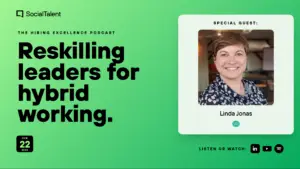
Reskilling leaders for hybrid working | with Linda Jonas
Hybrid leadership requires intentionality, not surveillance. Linda Jonas breaks down clarity, care, and connection—the framework transforming how managers support remote and distributed teams.
 Johnny CampbellHost · Co-founder & CEO, SocialTalent
What you'll learn
Set explicit expectations early since uncertainty undermines team engagement fast
Run consistent check-ins as your core tool for managing remotely
Prioritize self-care first so you can sustainably support your team
Measure output and outcomes instead of hours logged at a desk
00:00
--:--
Episode notes
Episode key takeaways
Clarity, care, and connection form the operational backbone of hybrid leadership. Clarity means explicit expectations about how work gets done and what success looks like. Care includes compassion, radical candor, and honest feedback. Connection prevents isolation and builds belonging across distance.
Presenteeism kills trust and inclusion. When senior leaders work in-office more than remote staff, it creates fear of missing out and invisible career penalties for those working flexibly. Intentional communication systems—not accidental office hallway moments—must distribute information equitably.
Output-based performance management requires rethinking, not just rebranding. The eight-hour workday is an arbitrary factory-era construct. What matters is whether the work gets done well, ethically, and with learning—not whether someone logged in at 9 a.m. or stayed late.
Regular check-ins are the single most important tool for hybrid leaders. Without physical cues and informal touchpoints, managers must be deliberate about understanding how people are doing, what they need, and where obstacles lie. This one practice enforces all three Cs.
Good to know
Frequently asked questions
The quick answers behind this episode.
How do you measure performance in hybrid teams without surveillance software? +
Shift from monitoring inputs to defining clear outputs and outcomes upfront. Use regular check-ins to understand progress, blockers, and individual needs. Data analytics can reveal patterns (silos, workload imbalance) when anonymized and aggregated—but relationship-based visibility beats keystroke tracking every time.
What's the difference between empathy and the cultivation mindset in leadership? +
Empathy is feeling; cultivation is action. The cultivation mindset assumes people want to succeed and removes your job to obstacles and provide resources. It’s forward-looking and solution-focused, not retrospective or sympathetic. It’s the sports coach model: believe in the athlete, equip them, then let them run the race.
How do you prevent hybrid work from creating invisible career penalties? +
Design systems that don’t rely on office presence. Share information through explicit channels, not hallway conversations. Set transparent criteria for promotion and visibility. Make it clear that flexibility is a right, not a privilege, and that career advancement doesn’t depend on being seen in the office.
Should employees adapt to output-based management, or do managers need to change first? +
Both, but managers lead. Managers must set clear expectations about what output-based work means and what success looks like. Employees then adapt to those expectations. Without clarity from leadership first, employees default to old time-based habits out of fear and uncertainty.
What's the biggest mistake companies make when going hybrid? +
Imposing a new rule (three days in, two days out) instead of rethinking how work actually gets done. Real hybrid success requires co-creating with teams, experimenting with what works for each role, and staying intentional about inclusion—not just swapping a five-day rule for a three-day one.