Generic AI tools like Copilot produce 30+ page transcripts with no actionable insights, and the friction of copy-pasting into a recruiting system kills adoption. Interview intelligence purpose-built for hiring solves both the data quality and the behavioral friction that generic tools create.
The Hiring Excellence Podcast · Episode 196
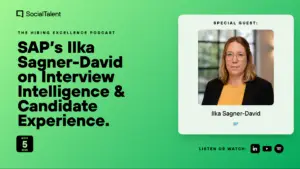
SAP’s Ilka Sagner-David on Interview Intelligence & Candidate Experience
SAP hires 25,000 people annually from 1.3M applicants. Ilka Sagner-David shares how the company is deploying interview intelligence to capture meaningful feedback, provide candidates with actionable insights, and navigate privacy concerns in a highly regulated market.
 Johnny CampbellHost · Co-founder & CEO, SocialTalent
What you'll learn
Recognize that mandating feedback alone does not guarantee usable interview data
Avoid generic transcription tools that dump long documents without real insight
Require candidates to actively opt in to interview recording rather than opting out
Sell candidates on faster feedback and decisions as the tool's real benefit
00:00
--:--
Episode notes
Episode key takeaways
Ilka's team is using interview intelligence to generate personalized candidate feedback at scale—but with a critical human gate. AI prepares the feedback, recruiters review it for inappropriate questions or bias, then send it to candidates. This balances speed with accountability.
Privacy and compliance aren't blockers; they're design requirements. In Germany, social partners and legal teams actually support recording when framed as fairness protection for candidates and interviewers alike. Active opt-in consent (not opt-out) is the standard.
Narrow the problem first. Before selecting a vendor, define whether you're solving for compliance, interview quality, candidate experience, or all three. Involve legal and ethics teams early to avoid roadblocks downstream.
Change management takes longer than expected. Identify vocal multipliers within the business—hiring managers and recruiters who experience the benefits firsthand—and let them drive adoption, not just the TA team broadcasting the tool.
Good to know
Frequently asked questions
The quick answers behind this episode.
Why didn't Copilot work for SAP's interview feedback process? +
Copilot generated 30+ page transcripts without real insights, and required manual copy-paste into the recruiting system to store feedback. The friction of that extra step broke adoption. Purpose-built interview intelligence tools eliminate both the noise and the behavioral friction.
How do you handle privacy and recording consent in Germany? +
SAP uses active opt-in consent—candidates must explicitly agree to recording, not opt out. Legal and social partners support this because recording protects both candidates (proof of fair treatment) and interviewers (performance protection). Transparency about benefits drives higher consent rates.
Can you use AI to generate candidate feedback automatically? +
Yes, but with human review. AI prepares personalized feedback based on interview data, but recruiters review it before sending to catch inappropriate questions or bias. This balances speed with accountability and maintains trust with candidates.
What's the biggest mistake companies make when rolling out interview intelligence? +
Underestimating change management and skipping stakeholder alignment. Involve legal, ethics, and hiring managers early. Identify internal multipliers—people who experience the benefits and advocate for adoption—rather than relying solely on TA to drive change.
Is interview intelligence an AI arms race with candidates using AI in interviews? +
To some extent, yes. But the solution is transparency and balance. SAP published ethical AI guidelines for both candidates and recruiters, making clear what’s allowed and what tools the company uses. This creates fairness across all stakeholders rather than escalating an arms race.