Most people don't articulate the skills they actually use. Success stories—structured conversations where peers ask 'How did you know to do that?' and 'What went through your mind?'—surface the hidden competencies candidates and employees don't naturally name. This reflective process reveals both technical ability and the thinking patterns behind it.
The Hiring Excellence Podcast · Episode 156
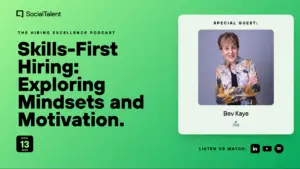
Skills-First Hiring: Exploring Mindsets and Motivation with Bev Kaye
Skills alone don't guarantee retention or performance. Bev Kaye explores how mindset, interests, and purpose—the hidden drivers behind capability—reshape how leaders should hire, develop, and deploy talent in a skills-first world.
 Johnny CampbellHost · Co-founder & CEO, SocialTalent
What you'll learn
Run a success-story exercise that surfaces skills someone doesn't know they have
Assess fit using skills, interests, and values instead of skills alone
Notice, name, and act on a teammate's overlooked skills systematically
Ask interview questions that reveal mindset and self-awareness, not just skills
00:00
--:--
Episode notes
Episode key takeaways
Mindset is the operating system beneath skillset. While headset describes what you do well, mindset captures how you think—the frameworks, influences, and mental models that shape your approach to problems. Bev distinguishes these because hiring for skills alone misses the curiosity, flexibility, and self-awareness that determine whether someone will thrive or plateau.
Legitimate fit requires three elements: skills, interests, and values. An accountant brilliant at Photoshop may flatline if bored by the work, no matter how capable. Managers who notice what energizes versus drains their team—and ask why—unlock retention and performance that skills mapping alone cannot predict.
Purpose and motivation are non-negotiable hiring filters. Organizations with a clear, narrow mission attract people who share that drive; those hired solely on capability churn within months. The motivation fit determines whether someone will sustain effort through difficulty or exit when the work feels hollow.
Curiosity is the meta-skill leaders need now. Getting down a level or two to ask genuine questions—'What signal told you that wouldn't work?'—reveals thinking processes and hidden abilities. In a world obsessed with mapping skills, the ability to notice, recognize, and ask better questions remains the irreplaceable human edge.
Good to know
Frequently asked questions
The quick answers behind this episode.
How do you identify skills employees don't know they have? +
Use the success stories exercise: have peers ask targeted questions about a completed project—’How did you know to do that?’ and ‘What went through your mind?’—then reflect back the embedded skills. People rarely stop to examine their own thinking process; structured peer inquiry surfaces competencies they take for granted.
What's the difference between mindset and skillset in hiring? +
Skillset is what you do well; mindset is how you think. Mindset encompasses the frameworks, influences, and mental models shaping your approach—whether you seek multiple perspectives, recognize your limitations, or think flexibly under ambiguity. Both matter; skills alone predict capability, not engagement or adaptability.
Why do high-skill candidates fail in roles they're overqualified for? +
Perfect skills with no growth opportunity breed boredom and disengagement. Candidates need a reason to take a role: new skills to develop, interests to pursue, or values to serve. If all three elements—skills, interests, and values—aren’t present, even capable people will look elsewhere within months.
How should managers recognize when someone is losing motivation? +
Watch for behavioral shifts: diminished energy, reduced initiative, or visible lack of joy in delivery. A two-minute conversation asking what you observe—’When you delivered that report, you didn’t seem to enjoy the doing of it’—opens space for honest reflection. Noticing early, verbalizing it, and mobilizing a move prevents silent attrition.
Can mindset and motivation be trained, or are they fixed? +
Both can shift with the right environment and reflection. Mindset often develops through exposure to different perspectives and deliberate questioning. Motivation depends on alignment between role and purpose; a manager who recognizes what energizes someone and deploys them accordingly can reignite engagement that seemed lost.