Transformation is metamorphosis, not incremental improvement. Moving from a dispersed, junior-positioned TA function to a strategic, in-house operating model requires 5 years minimum—not 6 months. Underestimating timeline and committing to unrealistic D&I targets too early are common mistakes that create downstream consequences.
The Hiring Excellence Podcast · Episode 28
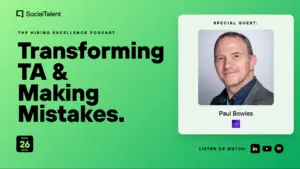
Transforming TA & Making Mistakes with Paul Bowles
Paul Bowles, global TA leader at Nokia, shares how deliberate mistakes and reflection—without regret—drive transformation. Learn why strategic thinking matters more in uncertainty, and how to avoid the pitfalls that derail TA change.
 Johnny CampbellHost · Co-founder & CEO, SocialTalent
What you'll learn
Reward attempts and experimentation, not only successful outcomes
Forgive yourself for past mistakes instead of dwelling in regret
Set visible milestones to show progress during a long transformation
Choose broad alignment over chasing a personally perfect solution
00:00
--:--
Episode notes
Episode key takeaways
Strategic thinking is more critical during uncertainty, not less. The temptation to stay in short-term firefighting mode is addictive because it feels heroic, but organizations that anchor to a 3–5 year vision and communicate clear milestones (base camp checkpoints on the way to Everest) retain focus and adaptability when macro events force pivots.
Resilience and belief are the connective tissue of high-performing teams. Like elite athletes who practice deliberately on their weaknesses, teams that recover quickly from mistakes, improve fundamentals, and align around a shared purpose outperform those that spiral into recrimination or imposter syndrome.
Alignment beats perfection. Paul learned this through an employer brand project where perfectionism over a font nearly alienated the VP of Communications and derailed stakeholder buy-in. Broad organizational alignment, prototyping, and iteration move transformation forward faster than waiting for consensus on every detail.
Recruiter experience is the foundation of candidate and hiring manager experience. If TA teams lack empowerment, tools, and appreciation, they cannot deliver world-class service downstream. Transformation must start by designing the experience for the people doing the work.
Good to know
Frequently asked questions
The quick answers behind this episode.
How long does TA transformation actually take? +
Five years is a realistic timeline for meaningful transformation, especially when it includes cultural shifts like D&I recruiting or repositioning TA as strategic. Mistakes come from agreeing to 6–12 month targets to please leadership. Show progress within 90 days and articulate clear milestones, but resist pressure to compress the journey.
What are the biggest mistakes TA leaders make during transformation? +
Not listening to the right people (or stopping listening too soon), letting others communicate difficult messages instead of owning them directly, becoming too attached to perfection over alignment, and accepting unrealistic timelines. Reflection is essential, but avoid spiraling into regret—you made the best decision with the information you had at the time.
How do you build an employer brand strategy without it consuming your day-to-day recruiting? +
Spend 40 minutes sharpening the axe before swinging it. Align stakeholders first (HR, comms, business leaders, candidates), prototype multiple concepts early, test visuals and job ad articulations, and iterate. This upfront work prevents rework and allows the team to execute consistently without constant brand firefighting.
Why do people resist change in TA transformation? +
People don’t resist change itself—they resist loss. Frank, honest communication about what’s changing and why, combined with clear milestones and visible progress, builds trust. Transformation fails when leaders assume resistance is irrational rather than addressing the real fear of losing familiar processes or status.
How should TA leaders approach mistakes and learning? +
Reflect deeply without letting reflection turn into recrimination or regret. Most decisions you make are sound given the information available at the time. Forgive yourself, learn the lesson, and move forward with confidence. Most things can be unwound or adjusted, so don’t fear starting—fear inaction.