The macro environment tightens talent pools while application volume surges. Baby boomers aging out, lower labor participation rates, and immigration constraints mean hitting hiring targets is harder regardless of economic cycle. Simultaneously, layoffs flood inbound pipelines with referrals and applications—creating a paradox where recruiters feel busier than ever despite a shrinking candidate market.
The Hiring Excellence Podcast · Episode 113
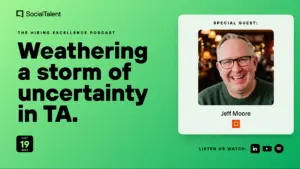
Weathering a storm of uncertainty in TA | with Jeff Moore
Economic uncertainty hits TA first. Jeff Moore, VP of Talent at Toast, shares how to future-proof your recruiting function through authentic networking, strategic hiring, and treating candidate transitions with reverence—not just filling seats.
 Johnny CampbellHost · Co-founder & CEO, SocialTalent
What you'll learn
Treat every backfill as a chance to upgrade talent, not just refill a seat
Expect recruiting to get harder, not easier, when applicant volume spikes in a downturn
Spot resilient recruiters by asking which hire they're most proud of
Build authentic professional networks before you ever need them for a job
00:00
--:--
Episode notes
Episode key takeaways
Attrition and backfills are opportunities to upgrade, not just replace. When someone leaves, the instinct is to refill the seat. Instead, ask: Why did they leave? What went wrong in hiring or assessment? Use that insight to hire better talent next time. This shifts TA from reactive to strategic—solving the root problem rather than repeating it.
Jeff Moore emphasizes becoming 'economy agnostic' by solving business problems, not filling jobs. Recruiters who separate themselves think strategically about how talent fits the company's puzzle. They evaluate candidates for their next role, not just the current one. They build internal mobility and rotational programs. They maximize existing talent before acquiring externally. That mindset insulates you from market swings.
Network before you need it. Building authentic relationships over years—through coffee, conferences, Twitter, warm intros—creates a safety net and a competitive advantage. When you network without immediate need, people trust your intentions. When crisis hits, they want to help. The best hires often come from conversations started months or years earlier, not from active job searches.
Treat every candidate transition with reverence. Changing jobs ranks among life's most stressful events. Recruiters who understand this become empathetic, ask why someone needs a sign-on bonus or extended start date, and avoid strong-arming candidates into miserable situations. That mindset prevents post-hire attrition and builds genuine relationships—some candidates become lifelong friends and referral sources.
Good to know
Frequently asked questions
The quick answers behind this episode.
Will hiring get easier in a recession? +
No. While application volume rises and inbound referrals increase, the overall talent pool shrinks due to demographic trends and lower labor participation. Recruiters face a double bind: more candidates to screen but fewer qualified people in the market. The skill required shifts from sourcing scarcity to filtering abundance—a different and equally demanding challenge.
How do TA teams avoid layoffs in uncertain times? +
Become indispensable by solving business problems, not just filling jobs. Build deep relationships with hiring managers. Understand company strategy and roadmap. Be flexible—willing to take on onboarding, internal mobility, or other HR functions. Demonstrate strategic value beyond headcount metrics. Recruiters who think like business partners, not transactional operators, are the ones companies protect.
What makes a recruiter recession-proof? +
Three things: a strong network built over years (not crisis-driven), the ability to identify talent beyond job specs, and genuine empathy for candidates. Ask yourself: What hire am I most proud of? If you can tell a rich story about why it mattered—not just the close—you’re thinking like a strategic recruiter. Volume producers are first to go; talent developers stay.
Should TA expand beyond hiring? +
Yes. Internal mobility, rotational programs, and upskilling initiatives maximize existing talent and reduce acquisition costs. When candidates see a company developing its people, they’re more attracted to join. This creates a flywheel: great talent begets great talent. TA becomes a talent-maximization function, not just a hiring function—far more resilient in downturns.
How do I start building my TA network if I'm introverted? +
Start where it’s comfortable: reconnect with former colleagues, classmates, or people from shared companies. Engage online first—comment on LinkedIn posts, follow industry voices on Twitter, join unconferences. Warm intros from friends lower the barrier. Once you build momentum, expand gradually. The goal isn’t to be an extrovert; it’s to have genuine conversations with people you find interesting.