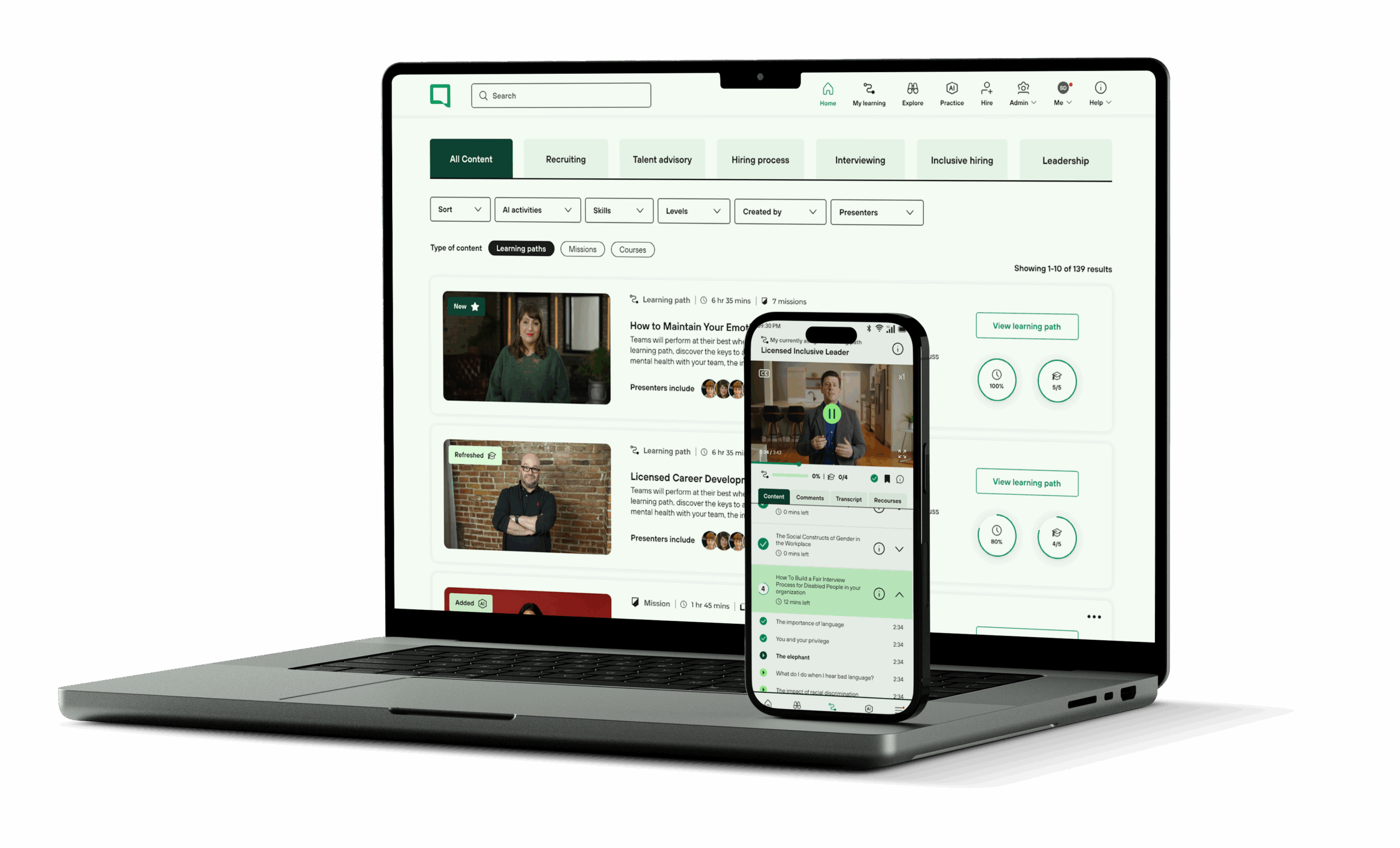
BrightHire is not an independent company any more. Zoom had been an investor since 2021, announced the acquisition on 13 November 2025 and closed it that December on undisclosed terms. BrightHire, founded in New York in 2019, now runs as a standalone brand inside Zoom, with founding CEO Ben Sesser moved across with it.
Metaview is not only an interview intelligence company any more. The $35M Series B led by GV closed on 25 June 2025 and took the total raised to $50M. The company spent it on a repositioning rather than a product refresh: from "AI interview notes" to an "Agentic Recruiting Platform," six named agents, the Notetaker one of them, sourcing the one that now opens the pricing page.
Both are still good at interviews. What is worth noticing is what each did with the year, because both faced the same question about what to build next and both answered it with breadth.
The key difference between Metaview and BrightHire
Metaview optimises the recruiter's time. BrightHire optimises the hiring leader's visibility. In a thirty minute demo they look close to identical, because both join the call, transcribe it and produce structured notes that land in your ATS. They are sold to different people. Metaview goes to the recruiter buried in admin who wants the notepad to disappear. BrightHire goes to the head of talent who cannot sit in on four hundred interviews a quarter and wants to know which of her interviewers are any good at it.
What is interview intelligence, actually?
The category is sold as one capability and is really four.
Capture is recording and transcribing what was said. Structure is aligning that transcript to a scorecard or a competency someone defined in advance. Analyse is turning the record into a signal a human can read: talk ratio and criteria coverage. Improve is the interviewer doing something different in the next interview than they did in the last one.
Almost every tool here delivers the first three and stops. That is where the category drew its own boundary, not a failing of any one vendor, and it matters because the first three stages produce an extremely accurate record of a problem while the fourth is the only one that removes it.
There is a second distinction, and it decides more about procurement than any feature list will. Some platforms evaluate the candidate, scoring or ranking them. Some evaluate the conversation, turning it into structured notes and a searchable transcript library. And some evaluate the interviewer, reporting how long they talked and which criteria they never asked about, then surfacing the pattern a hiring leader most needs to see, which is five candidates for the same role getting five different interviews.
That choice sets your regulatory exposure, and you meet it at procurement whichever vendor you pick. A tool that scores candidates is likely an automated employment decision tool under New York City's Local Law 144. The obligation to run and publish the annual bias audit sits on the employer, not on the vendor, a nuance most comparison content gets backwards. The same tool is a likely candidate for Annex III of the EU AI Act. The European Parliament approved the Digital Omnibus on 16 June 2026, which would defer the high-risk employment obligations from 2 August 2026 to 2 December 2027. That deferral is not law yet. If it misses the Official Journal before 2 August 2026, the original date applies as written.
Metaview's approach
Metaview was built to replace the recruiter's notepad and it is unusually good at that job. It joins interviews and intake calls, transcribes them, produces notes aligned to whatever template you set and pushes the result into your ATS, across more than forty integrations including Greenhouse, Ashby, Lever and Workday. It is a London company, its founders came out of Uber and Palantir, Brex has published a case study claiming more than 1,000 hours saved, Quora and Perkbox are also named customers, and G2 has it at 4.8 out of 5 across 132 reviews, last updated 17 July 2026.
Then the Series B landed. The $35M round closed on 25 June 2025 with a plan to triple headcount and open a San Francisco office, and what followed was a repositioning rather than a product refresh: six agents, for Notes, Sourcing, Outreach, Reports, Job Posts and Application Review, plus a seventh called fillmore, an autonomous outbound agent that is waitlist only as of July 2026.
The Notetaker has not gone anywhere, and anyone reading the repositioning as a quiet discontinuation has it backwards, because the product is actively sold and still carries a permanent free tier, and it remains the one most of Metaview's reviews are about, so what changed over the past year was not the Notetaker itself but its position in the company's own shop window.
The complaints cluster. Language and accent accuracy appears in six or more reviews, with Kimberly B. writing that "it mixes up languages. When I do interviews in German, it gives me my interview notes in English." Summaries read generic, and ATS syncs disconnect without warning. The sharpest review on either vendor is a 0.5 out of 5 dated 7 July 2026 from Arsen I., a senior full-stack developer: "The API just seems like it doesn't exist as a class. We want to integrate deeply with Metaview, but there's no API. Also, we can't get access to all our historical data from the very beginning."
BrightHire's approach
BrightHire records inside Zoom, Meet and Teams, transcribes in more than thirty languages, aligns highlights to scorecards and gives hiring leaders a way to see who interviews well and who does not, while its own site names four ATS integrations: Greenhouse, Workday, Lever and Ashby. The customer list is the strongest in the category: Canva, Ramp, SoFi, HubSpot, Duolingo and Instacart, and G2 has it at 4.8 out of 5 across roughly 120 reviews, the same score Metaview carries across 132. BrightHire Screen, sold separately, is an asynchronous voice or video AI interviewer that builds agents from a job description and scores against custom rubrics.
Then Zoom bought it, and the positioning moved with the ownership, from "interview intelligence" to "The Most Advanced Hiring Intelligence Platform."
The clearest thing to come out of the acquisition is Candidate Fraud Detection, launched June 2026 in early access for Zoom Workplace customers, which flags deepfakes through rendering artifacts and cross-checks IP location, answer timing, tab switching and matching against LLM-generated answers, every signal read from inside Zoom's own stack. Fraud agents appeared at Phenom, Gem, Findem and Bullhorn inside the same twelve months, which makes the capability itself unremarkable, but BrightHire is the only one of them that reads the video pipeline directly, because it is now part of the company that owns the pipeline.
The rest of the roadmap went the way Metaview's did, since BrightHire's own FAQ describes "a growing fleet of AI copilots and agents," and the fleet is five: a chat assistant, a copilot for job descriptions and interview plans, an intake and debrief agent, a candidate rediscovery agent, and an interviewer coaching tips agent, gated by tier, with Screen priced apart from all of it.
Compliance is a strength: SOC 2 Type II, GDPR and CCPA, an annual third-party bias audit, and a plain statement that it does not use AI to evaluate video and never uses customer data to train third-party models. Its own outcome figures, a 28% pipeline efficiency gain and 27% fewer interviews per hire, come from an unaudited study across 25,000 candidates.
Its recurring complaints look like Metaview's, which is telling. Transcription accuracy suffers on non-English interviews and technical jargon, and analysis turnaround is slow. Templates are hard to bend, and that rigidity points at the theme that actually matters, which is that the analytics capture well without converting into action.
Where they overlap
More than either would like: both record and transcribe live interviews, both generate AI structured notes, both sync to ATS scorecards, both keep a searchable library, both produce interviewer behaviour analytics, and both cover GDPR, though only BrightHire publishes SOC 2 Type II, so confirm Metaview's certification directly rather than assuming parity. They are also the only two vendors in the wider market that capture the actual intake conversation instead of making the hiring manager fill in a form, and that window is narrow and closing, since Greenhouse has a Job Kickoff Agent announced for Q3 2026.
In a demo they look nearly the same, and the demo is not where this decision gets made.
Where they differ
Buyer, first. Metaview is bought by recruiters and TA ops, BrightHire by hiring leaders, and most of what follows is downstream of that. Transparency, second, and the gap here is total: one of them publishes a rate for every product and the other publishes nothing anywhere on its site.
Ownership, third. Metaview is independent with $50M raised, while BrightHire is a subsidiary of a video conferencing company, which buys it a fraud detection capability nobody else can copy and raises a question nobody outside procurement can answer, namely whether being owned by a platform business changes how the contract is negotiated at renewal, which is why it is question six in the checklist below.
Direction, fourth. Metaview is heading toward agentic sourcing, BrightHire toward Zoom-native hiring, and neither road ends at a better interview.
How to choose between Metaview and BrightHire
1. Time back or visibility?
If your recruiters are writing up notes after every screen and the admin is what eats the week, you are buying time back, and Metaview is built for that. If your problem is forty hiring managers across six offices running interviews you never see, and you find out one of them was bad only when a candidate declines and writes something specific in the survey, you are buying visibility, and BrightHire was designed around that reader.
Answer this one first. Everything below is downstream of it.
What's missing?
Neither connects the interview to what happened after it, so you will know how many interviews were recorded and how many scorecards were completed, and you will not know whether the hire worked out, which means a year of data tells you how much interviewing you did and nothing about whether any of it predicted anything.
2. Can you evaluate it before you talk to sales?
Only one of them lets you: every Metaview product carries a free tier, at 25 calls a month on Notetaker, 100 profiles on Sourcing and 50 applications on Application Review, which means you can have it running against real interviews this afternoon, while BrightHire routes all three tiers plus Screen to a demo request.
What's missing?
Neither offers a real enterprise-grade trial with your own ATS connected, your own scorecard templates loaded and your own permission model applied. A free tier evaluates the transcription. It does not evaluate the integration or the admin controls, and it tells you nothing about what happens when two hundred interviewers on four levels of access all touch the same library, which is where implementations fail.
3. What happens to the insight after it is generated?
Both platforms will tell you that Manager A talks 70% of the time while Manager B talks 30%. Both will show you that one interviewer asked three candidates for the same role three unrelated sets of questions. Neither will teach Manager A to stop.
What's missing?
The insight lands in a dashboard and the dashboard is the end of the road. Closing the distance between what the analytics observed and what the interviewer does next week is left to a training programme, bought separately, on a different budget line, owned by a different team, and almost never connected back to the recording that identified the problem. That is how a talent leader ends up holding two years of interview analytics and still unable to say whether any single interviewer got better at interviewing, which is the one question a CHRO will ask.
4. What is the vendor's direction of travel?
Ask both where the interview product sits on their 2027 roadmap and how many engineers are on it. The answers will be different.
Metaview's public evidence is a pricing page where sourcing comes first and notes come third. BrightHire's is a fleet of five copilots and agents its own FAQ describes as growing. This is category-wide rather than unique to either: Phenom ships eight named agents, Bullhorn nine, Findem seven, and Greenhouse has five or more announced with most still unshipped.
What's missing?
Depth on the interview. Both spent a year adding stages of the funnel rather than improving the one stage they were built for, so if the interview is the weakest part of your hiring process you are buying that capability from a company for which it is one product among six or seven. Price the renewal accordingly.
Metaview vs BrightHire: feature comparison
Nine rows rather than fifty. It covers only the axes where the two genuinely diverge.
| Metaview | BrightHire (Zoom) | |
|---|---|---|
| Best for | Recruiters and TA ops whose bottleneck is note taking | Hiring leaders needing visibility across a distributed pool |
| Recording and transcription | Yes, interviews and intake calls | Yes, in Zoom, Meet and Teams, 30+ languages |
| What it evaluates | The conversation. No candidate scoring | The conversation. Screen scores against rubrics |
| Real-time guidance | Not published | Coaching tips agent, gated by tier. Delivery timing not published |
| Connected training | No | No |
| Asynchronous AI screening | No | Yes, Screen, sold separately |
| Compliance posture | GDPR. Ask for the SOC 2 report. Application Review exposure depends on use | SOC 2 Type II, GDPR, CCPA, annual bias audit. Screen likely in Annex III and LL144 scope |
| Pricing model | Published in full, per agent, per user | Not published. Three tiers plus Screen, demo-gated |
| ATS depth | 40+ integrations | Four named on its own site: Greenhouse, Workday, Lever, Ashby |

Pricing
The two are further apart here than anywhere else on this page.
Metaview publishes everything, per product. Notetaker is free up to 25 calls a month, $60 per user per month on Pro, custom at Enterprise. Sourcing is free up to 100 profiles, then $100 per user per month on Pro and $300 on Max. Application Review is free up to 50 a month, then $150 a month for unlimited users. Note the shape: a team buying two agents pays for two agents, and the per-user rate means every hiring manager you grant access to costs money whether they sat in on forty interviews or four.
Nothing comparable exists on BrightHire's site. Three tiers, named Recruiters, Teams and Enterprises, plus BrightHire Screen, all behind "Request a Demo," with no free tier and no rate card. Third-party aggregators including Vendr and SelectHub put deployments from roughly $15,000 a year for a small team up to $100,000 and above at enterprise, but those are practitioner-reported estimates rather than vendor figures, they may predate the December 2025 Zoom close, and they are worth treating as an order of magnitude.
Treat review-site pricing here as fiction unless you can match it to a vendor page. Metaview's real Notetaker rate is $60 per user per month; Capterra, TrustRadius and G2 variously report $20, $26 and $50 for it, none of which matches the vendor page. Pricing above was last verified 28 July 2026.
What to ask for in the quote
Six questions worth putting in writing before either contract goes to signature.
- What caps the annual uplift over a multi-year term, as a percentage rather than an intention?
- What happens to seat count mid-term, and can seats come down at renewal or only go up?
- What is the export format and completeness on termination, including data from the start of the contract?
- Are interview recordings deletable on a candidate's request, and how quickly?
- Which legal entity is the data controller, and did that change at the December 2025 close?
- Is the price contractually independent, or can it be folded into a platform agreement at renewal?
Three is there because of a dated complaint about historical data access. Six is there because a standalone brand inside a platform business does not always keep a standalone renewal.
The verdict
Choose Metaview if: your bottleneck is genuinely note taking and the recruiter admin around it. If you want to run a real evaluation this week without booking a call, Metaview is the only one of the two you can. If you are also in the market for sourcing or application review and would rather consolidate on one vendor than run three, the agent model is built for exactly that and the pricing is legible enough to model in a spreadsheet before you speak to anyone. And if the people who will actually use it are recruiters rather than executives, note that the reviews behind that 4.8 are overwhelmingly about the note-taker, which is the part you are buying.
Choose BrightHire if: you need hiring-leader visibility across a large, distributed interviewer pool, which is the problem it was designed around and the one it is still best at. If you are already a Zoom shop and candidate fraud is a live concern, Candidate Fraud Detection reads signals from inside Zoom's own stack that no independent vendor can reach, and that one capability may outweigh everything else here. If you need mature Workday or Greenhouse integration at enterprise scale, the reference list runs from Canva and HubSpot to Duolingo and Instacart, and the compliance posture is the stronger of the two. And if you want asynchronous AI screening in the same platform, Screen is there and Metaview has no equivalent.
A third option worth knowing about. Both platforms surface interviewer behaviour and then stop. If the gap you are closing is interviewer capability rather than documentation or oversight, that is a different category of product: one that evaluates the interviewer rather than the candidate, and routes each observed gap to the training that fixes it. SocialTalent builds there, at €0.99 per interview with a minimum purchase of 5,000 and unlimited users. It is the wrong shape below roughly 500 hires a year, and it has no candidate sourcing and no asynchronous AI screening. Recording proves the interview happened. Training changes what happens next. More at interview intelligence, our pricing page, and the SocialTalent vs BrightHire head-to-head.

Frequently asked questions
Is Metaview or BrightHire better for interview notes?
Metaview, for most teams. It was built as a note-taker first, it is still the product most of its 132 G2 reviews are about, and it is the only one of the two you can test for free. Both share one weakness: transcription accuracy drops on non-English interviews and technical jargon.
Did Zoom buy BrightHire?
Yes. Zoom announced the acquisition on 13 November 2025 and closed it that December on undisclosed terms, having been an investor since 2021. BrightHire operates as a standalone brand inside Zoom and CEO Ben Sesser joined Zoom.
What changed at Metaview and BrightHire in the last year?
Both repositioned. BrightHire moved to "The Most Advanced Hiring Intelligence Platform" and launched Candidate Fraud Detection in June 2026. Metaview closed a $35M Series B led by GV on 25 June 2025 and moved to an "Agentic Recruiting Platform" with six agents plus the waitlisted fillmore.
Can Metaview and BrightHire both integrate with Greenhouse?
Yes. Metaview lists more than forty ATS integrations; BrightHire's own site names four: Greenhouse, Workday, Lever and Ashby. Metaview reviewers report syncs disconnecting without warning, so test the connection under load first.
Does either Metaview or BrightHire detect candidate fraud?
Only BrightHire does. Candidate Fraud Detection launched June 2026 in early access for Zoom Workplace customers, using deepfake rendering artifacts, IP location, answer timing, tab switching and LLM-answer matching. Those signals are proprietary to Zoom.
Published by SocialTalent, which makes interview intelligence software. We've kept this comparison factual and sourced. If you want the version where we argue our own corner, that's over here.