Ray argues that well-being programs launched in survival mode during COVID now have to prove their commercial value, not just their compassion. He frames burnout as a direct threat to output, not a soft HR concern separate from the P&L.
The Hiring Excellence Podcast · Episode 235
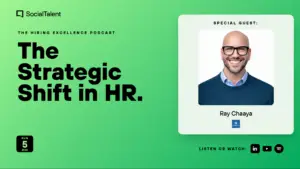
The Strategic Shift in HR: Skills, AI, and TA's Future Now
Zurich Canada's Ray Chaaya explains why HR must tie well-being, skills, and AI decisions to business strategy, not just process. Worth the listen.
 Johnny CampbellHost · Co-founder & CEO, SocialTalent
What you'll learn
Recognize why not every automatable HR task should be automated
Design apprenticeship pipelines with schools to build early-career talent directly
See how AI reshapes core insurance work like underwriting and claims
Use six-month business secondments to build HR's commercial acumen
00:00
--:--
Episode notes
Episode key takeaways
Rather than treating AI as a headcount-reduction exercise, the better question is what higher-value work people should shift into once tools absorb the admin. This reframes AI adoption around elevating output and customer service rather than cutting roles.
Workforce planning is shifting from 'what roles do we need' to 'what skills bring the strategy to life,' with talent acquisition, development, and management operating as one connected system rather than siloed functions. Each function needs to understand strategy directly, not just execute against it.
AI is hitting talent acquisition hardest by stripping out scheduling, note-taking, and admin, leaving recruiters to focus on the human side of the job. The future recruiter's value sits in relationship management, not process execution.
Centers of excellence and HR business partners can't operate as they used to: COEs shouldn't just push out programs, and HRBPs shouldn't be routed every transactional question. Each needs a distinct, higher-value role built on expertise and business context rather than service delivery.
Good to know
Frequently asked questions
The quick answers behind this episode.
How has HR's role in the business changed since the pandemic? +
Before COVID, HR fought for a ‘seat at the table.’ Lockdown forced HR leaders into daily CEO-level decisions on remote work, safety, and morale almost overnight. The shift now is proving that speed wasn’t just emergency adrenaline – HR has to show its wellbeing and culture work is tied to sustained business strategy, not crisis response.
What's the right question to ask about AI and headcount in HR? +
Ray argues the default question – do we still need these people – is the wrong one. The better question is what people should now spend their time doing so AI tools elevate deliverables and improve service to customers, rather than treating automation purely as a cost-cutting exercise.
How should talent acquisition, talent management, and talent development work together? +
They should function as one connected system tied to business strategy rather than separate silos. TA needs to understand strategy to source the right potential, talent development builds that potential into readiness, and talent management identifies who’s ready for succession – all anchored to the same strategic capability needs.
Are HR and IT/transformation roles merging into one function? +
There’s growing overlap between HR and technology or transformation offices as more tech enters the HR space, with some organizations testing combined chief people/technology roles. Whether they fully merge remains unclear, but collaboration and clear handover points between HR and transformation teams are becoming essential.
What skills should HR professionals develop to advance their careers? +
Understanding the business is critical – without it, HR struggles to connect people work to strategy. Ray invests in secondments and development programs with business partners so HR professionals learn to speak the language of the business, not just the craft of HR, to justify their seat at the table.