The core lesson from recovery wasn't a productivity hack but a mindset shift: attention is a limited resource that must be actively protected, not passively spent. Treating focus like a finite asset, rather than something to be given away to every notification, reshaped how daily priorities get set.
The Hiring Excellence Podcast · Episode 240
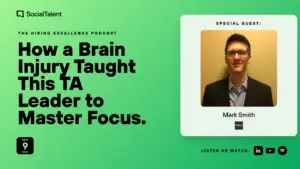
How a Brain Injury Taught This TA Leader to Master Focus
Cargill's Mark Smith survived a near-fatal fall and rebuilt his focus from scratch. Hear the six habits that transformed his leadership and attention.
 Johnny CampbellHost · Co-founder & CEO, SocialTalent
What you'll learn
Schedule focused work blocks using a Pomodoro-style timer
Build a personal AI agent to help organize work priorities
Use AI voice-to-text tools to capture and organize scattered thoughts
Swap a buzzing smartwatch for a basic fitness watch to cut distraction
00:00
--:--
Episode notes
Episode key takeaways
Instead of opening email first thing, the day now starts with a written priority list before the inbox is even touched, turning a reactive habit into a proactive plan. That small sequencing change shifted him from being led by other people's messages to actually leading his own day.
Notifications were switched off entirely and the phone now sits permanently on silent, because chasing every buzz or pop-up was fragmenting concentration and training the brain to expect interruption. App alerts were bundled into scheduled summaries so attention shifts on his terms, not an app's.
Before the accident, back-to-back meetings filled entire days and were worn almost like a badge of honor, which pushed real work into evenings and weekends. Mark has since cut meeting load and deliberately blocks solo time to protect the quality of the work itself, not just the hours logged.
Screen scrolling became physically painful during recovery, so reading filled the gap instead - a dramatic swing from just three or four books a year before the fall to dozens more once screens were off-limits. Books became the therapeutic replacement for a brain that could no longer tolerate glowing screens.
Good to know
Frequently asked questions
The quick answers behind this episode.
What caused Mark Smith's mild traumatic brain injury? +
He fell roughly fifteen feet from a ladder while cutting tree branches, hitting his head on a boulder and suffering a mild traumatic brain injury to the occipital lobe – the area tied to visual processing. He also tore his ACL, broke his arm, and shattered teeth, but the head injury caused the most lasting cognitive effects.
How does a brain injury affect multitasking and focus? +
The injury caused a loss of what he calls cognitive automaticity, the autopilot ability to handle multiple visual inputs at once. Ordinary environments like antique stores, Walmart aisles, or traffic became overwhelming, forcing him to consciously narrow his focus to single points, like the bar of a shopping cart, just to function.
What habits helped this TA leader manage attention after his head injury? +
He quit Instagram, Facebook and TikTok, put his phone permanently on silent, turned off pop-up notifications, and swapped a buzzing smartwatch for a basic fitness tracker. He now plans his day with a written list before opening email and uses a Pomodoro-style timer to protect blocks of focused work.
Why did he cut back on his meeting load? +
Before the accident he ran a packed schedule of meetings and treated it almost like a badge of honor, which pushed real work into evenings and weekends and hurt its quality. After recovery he deliberately reduced meeting volume and started booking meetings with himself to protect time for focused, high-quality work.
How can leaders use AI to organize scattered thoughts and priorities? +
He uses voice-to-text and transcription tools on his phone and in the car to capture ideas he couldn’t otherwise organize during recovery, and built a personal AI agent named Cecil to help plan work and coordinate his thinking, particularly useful while onboarding into a new organization at Cargill.