
By Lee Flanagan
✨ AI Summary:
- Skills-based hiring adoption is only surface-level change without structured, evidence-based interviews backing it up—relabeling a CV screen does not eliminate bias.
- Unstructured interviews reward confident storytelling over demonstrated capability, allowing fabricated credentials to advance; structured interviews designed to surface evidence prevent this.
- EU AI hiring rules codify transparency and human oversight as compliance floors, but good interviewing already owed candidates clear criteria and explainable decisions.
- Hiring freezes atrophy interviewer evaluation skills; when hiring restarts, this readiness gap directly costs decision quality and speed—maintain interview capability during pauses.
Weekly Roundup · 2026-08-31 to 2026-09-04
Grant Wyatt used AI to fabricate a work history. It got him interviews. The performance worked because the interviews rewarded confident storytelling over evidence. Seventy percent of employers say they have adopted skills-based hiring, the EU’s new AI hiring rules took effect in August, and hiring freezes are lifting across sectors. This week’s pieces ask the same question of all three: does any of it change how the decision actually gets made?
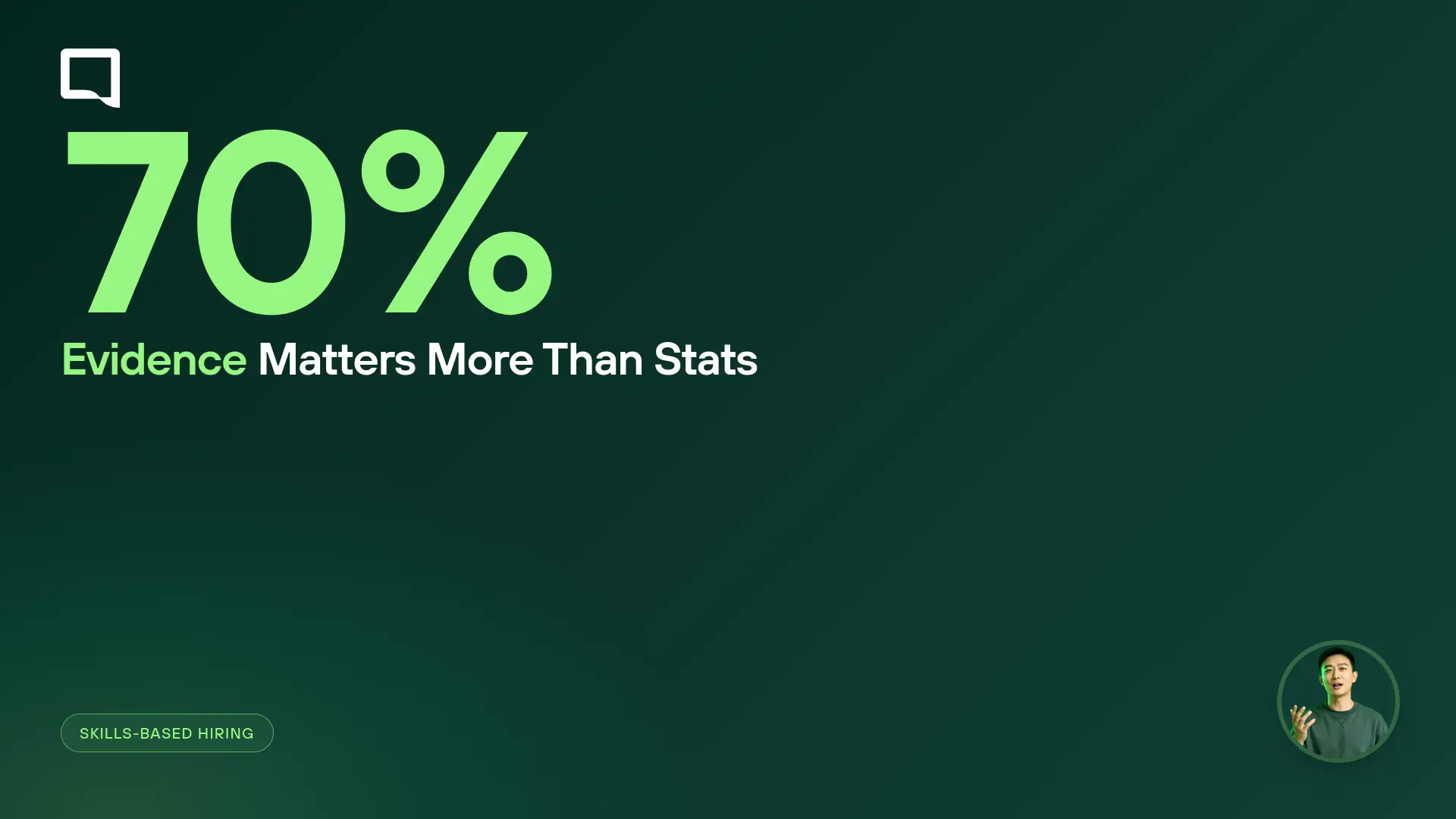
Seventy Percent Adoption Does Not Mean Seventy Percent Change
A headline stat on skills-based hiring sounds like proof the industry moved. Without structured, evidence-based interviews behind it, it is a relabelled CV screen. Our work with hiring teams shows the label changes faster than the evaluation method, and that gap is where bias and guesswork still live.

Confident Storytelling Beats Evidence in Loosely Structured Interviews
Grant Wyatt says AI made looking credible easy, but the same performance wins interviews that rely on narrative over evidence. The fix is not more suspicion or verification theatre. It is structure: interviews designed to surface what someone can do, not how well they can describe having done it.


Compliance Codifies What Good Interviewing Already Owed
The EU’s AI hiring rules require transparency and human oversight as of August 2, 2026. Good interviewing already owed candidates this: clear criteria, explainable decisions, human judgement. Compliance is not a new standard. It is a floor most hiring has been operating below.
The Hidden Cost of a Freeze Is the Interviewer Who Went Idle
Hiring freezes save budget, but the evaluation muscle inside the organisation goes idle too. When hiring restarts, interviewers are rusty, and that readiness gap costs quality and speed. The real cost of a freeze is not the roles left open. It is the capability that atrophied while no one was looking.
The week’s throughline is not that hiring is broken. It is that hiring keeps announcing it has fixed itself while leaving the decision-making process untouched. Skills-based, AI-resistant, compliant: all of it is performance if the interview itself still rewards the best storyteller in the room.
